


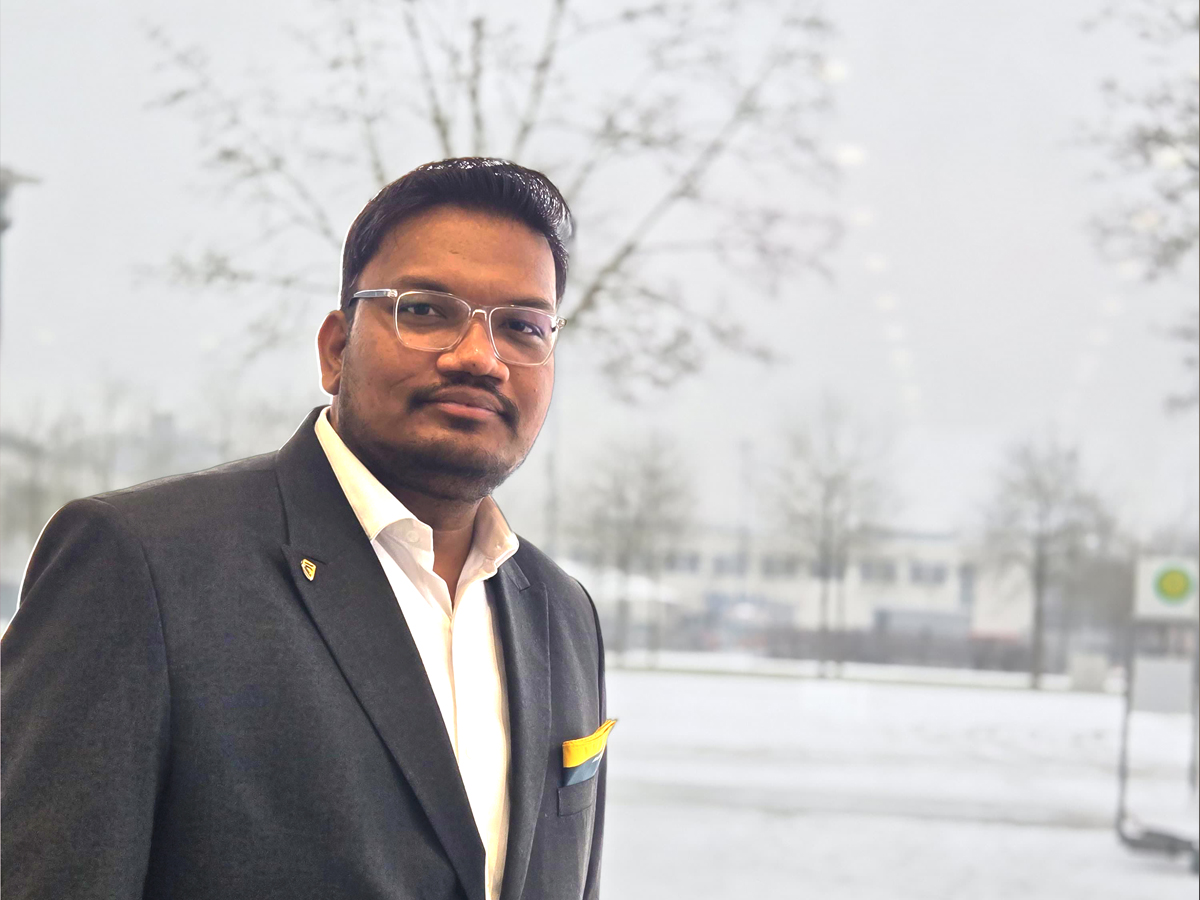
Indian developers and architects now seek advanced thermal break systems, high acoustic insulation, seismic resistance, and BIM integration—paired with minimalist aesthetics, clean lines, and premium finishes that meet global performance and sustainability standards, says Swapnil Hire, Director, Commercial Operations, Alumil India, in an interview with Prasenjit Chakraborty.
Q.1. You’ve worked extensively with aluminium systems for over 14 years. How have you seen façade and fenestration technology evolve during this time, especially in the Indian context?
Over the past 14 years, I’ve witnessed a remarkable transformation in façade and fenestration technology in India. Initially, the industry was driven primarily by cost and basic functionality. However, with globalisation, urbanisation, and growing awareness around sustainability and energy efficiency, there has been a significant shift toward performance-oriented systems.
Today, Indian developers and architects are demanding advanced thermal break systems, high acoustic insulation, seismic resistance, and integration with automation and BIM technologies.
The aesthetic expectations have also matured — we now see greater emphasis on minimalism, clean lines, and premium finishes, all while maintaining compliance with international performance standards. This evolution reflects India’s emergence as a serious player in global architecture and construction.
Q.2.Alumil Systems India, you’re leading major projects involving curtain walls and building envelopes. Could you share a project that challenged you both technically and creatively?
One standout project was a high-rise luxury residential tower in Mumbai, which required an ultra-slim façade profile while achieving high wind-load resistance and exceptional thermal performance. The architect envisioned a seamless glass façade with minimal aluminium visibility — which challenged both engineering limits and material behaviour. We collaborated closely with our R&D team in Greece and leveraged our M7 system, customising it further to meet the project’s specifications. Additionally, working with diverse stakeholders — from international consultants to local contractors — demanded nuanced coordination and communication. The project was a true test of technical agility and creative problem-solving, and it ultimately became a benchmark in the region.
Q.3. How do you balance the aesthetic aspirations of architects with the technical and structural requirements of façade systems?
Balancing aesthetics with performance is both an art and a science. The key lies in early collaboration — we involve architects and structural consultants right from the conceptual phase to understand the design intent, then work backwards to engineer a solution that meets both visual and functional goals.
With Alumil’s vast portfolio of modular systems, we can often offer ready solutions that align with the aesthetic narrative while maintaining structural integrity, thermal insulation, and ease of fabrication. Where needed, we also develop project-specific solutions.
Ultimately, it’s about listening closely, aligning visions, and co-creating façades that are as performative as they are beautiful.
Q.4. You’re currently pursuing further studies at ISB. How is your business education complementing your engineering background in terms of leadership and strategic decision-making?
My time at ISB has been transformative. Coming from a core engineering and operations background, I felt the need to broaden my strategic lens — and ISB provided that perspective. The curriculum has sharpened my understanding of financial modelling, market dynamics, and organisational behaviour, which are essential in leading cross-functional teams and making long-term business decisions. Moreover, interacting with peers from diverse industries has enriched my problem-solving approach and exposed me to best practices in leadership, innovation, and digital transformation. This fusion of technical expertise with strategic acumen has been instrumental in driving Alumil India’s growth roadmap.
Q.5. Sustainability is increasingly vital in modern construction. How do you integrate energy efficiency and environmental considerations into façade engineering?
At Alumil, sustainability is embedded in our DNA. We engineer our systems to deliver superior thermal performance through features like polyamide thermal breaks, multi-chambered profiles, and high-spec double or triple glazing integrations. Our products meet and often exceed global standards like LEED, IGBC, and BREEAM. Additionally, we emphasise lifecycle thinking — our aluminium profiles are made from high-recycled content and are themselves fully recyclable. We also work with project teams to simulate energy models using façade-specific data, helping them make informed decisions that reduce operational carbon footprint. Sustainability isn’t an add-on anymore — it’s a design driver, and we take pride in being part of the solution.
Q.6. What advice would you give to young engineers who want to make a mark in the façade and fenestration industry?
First and foremost, be curious. The façade industry sits at the intersection of architecture, engineering, materials science, and design — so continuous learning is crucial. Develop a strong foundation in building physics and structural mechanics, but also stay updated with evolving design trends and digital tools like BIM. Soft skills matter just as much — communication, adaptability, and stakeholder management are key in this collaborative domain. Lastly, find a mentor and seek out diverse project experiences early on. This industry offers immense scope for innovation, and with the right mindset, young engineers can shape skylines — quite literally.