



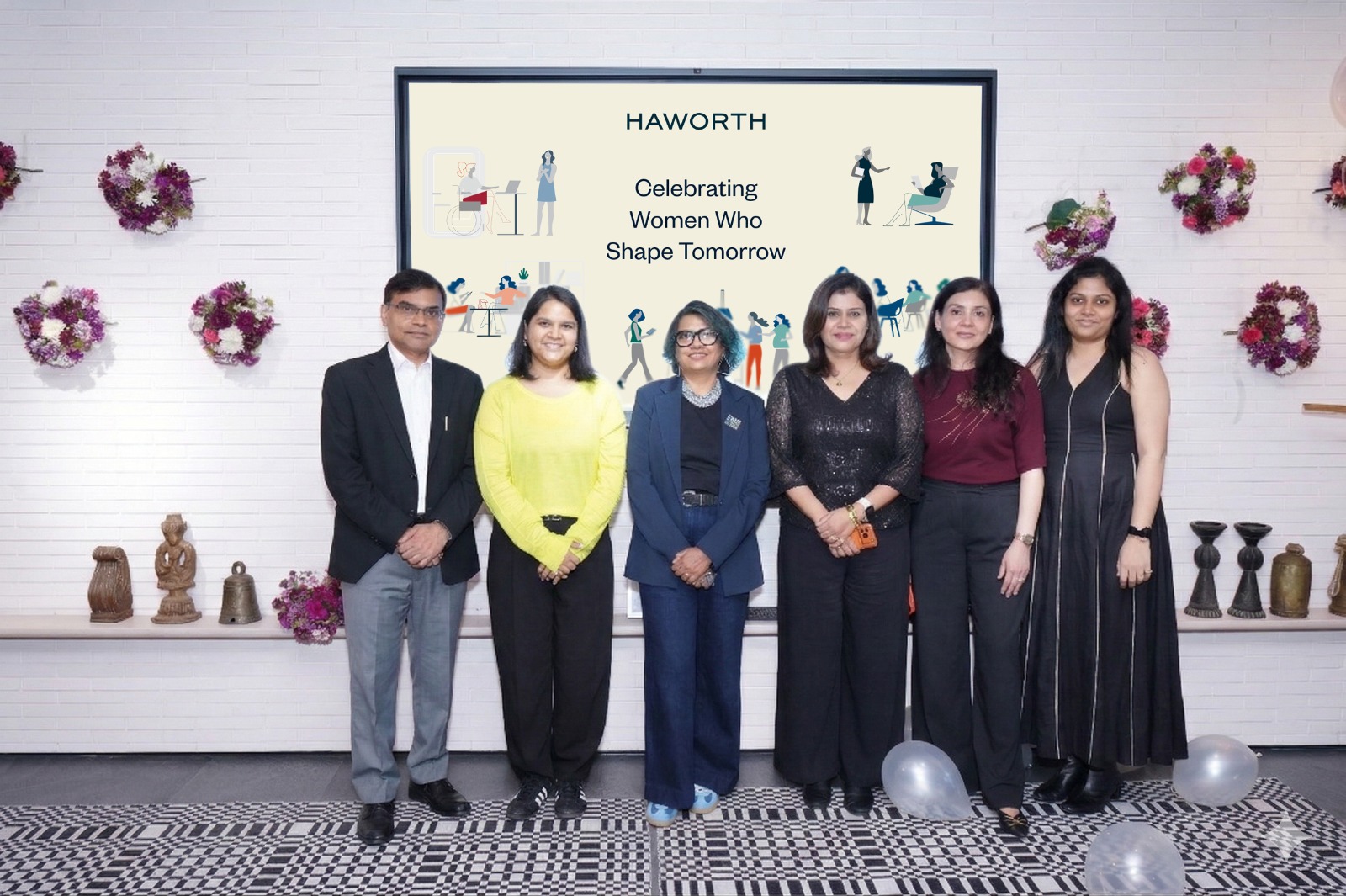
As organisations rethink the future of work, the role of women in shaping inclusive and empathetic workplace environments is becoming increasingly visible. At a time when companies are placing greater emphasis on employee wellbeing, flexibility and diversity, women leaders in the architecture and design ecosystem are emerging as key voices in redefining how workplaces are imagined and experienced. Commemorating International Women’s Day 2026, Haworth India hosted a leadership roundtable series titled ‘Give to Gain’, bringing together senior women professionals from architecture and design firms, corporates and project management consultancies to discuss the evolving role of women in workplace design and leadership. The initiative, held across multiple cities including Mumbai and Delhi, aimed to examine how inclusive workplace environments and leadership approaches can contribute to stronger organisational outcomes.
The Mumbai edition of the panel was hosted at Haworth India’s Powai showroom and featured Zainab Mukadam, Senior Director and Head of Design – India at Cushman & Wakefield; Soumya Vajpayee, Editor-in-Chief of Billboard India; and Kalpana Shankar, Regional Head – Real Estate and Workplace Services MEIA WPP. The conversation explored the intersections between leadership, mentorship and the design of workplaces that enable employees to thrive.
Over the years, workplace design has gradually shifted from being purely functional to becoming a strategic tool that shapes organisational culture. Increasingly, design decisions are being guided by the need to create environments that are inclusive, adaptable and responsive to diverse employee needs.
 Kalpana Shankar highlighted how the relationship between workplace policies and spatial design plays a significant role in supporting women employees, particularly those returning to work after maternity or career breaks. According to her, policies and workspace design must function together rather than operate in silos.
“Workplace design actually plays a critical role in motivating women employees who come after a break either maternity or career break. When you have policies which are integral to the company plus workspace design actually both are integral things for productive workspace,” she noted. Flexible work environments, mother care rooms, appropriate seating systems and dedicated spaces for rest can help women reintegrate into the workforce with greater confidence and comfort.
The conversation also touched upon how thoughtful design elements can address safety and wellbeing considerations within the workplace. Lighting design, ergonomic workstations and carefully planned layouts can significantly influence how safe and comfortable employees feel within an office environment.
Shankar emphasised that inclusive workplaces must be informed by diverse perspectives during the design process. “When a workspace is being designed for the employees, it is necessary to have a mix of employees to give feedback so that the design can be more conducive for each and every employee,” she explained, noting that different employees have different needs at various stages of life and career.
Industry leaders also acknowledged how the sector itself has evolved over the years in recognising the importance of inclusion. Earlier, workplace infrastructure rarely accounted for the nuanced needs of women employees. Today, organisations are increasingly integrating dedicated spaces such as mother care rooms, flexible seating options and improved lighting strategies into workplace planning.
These shifts reflect a broader change in how organisations view the relationship between design, productivity and employee wellbeing. For Zainab Mukadam, Senior Director and Head of Design – India at Cushman & Wakefield, mentorship and collaborative learning have played a defining role in this transformation. Reflecting on the theme of the event, she emphasised how the spirit of sharing knowledge strengthens professional ecosystems. 
“Workplace design sits at the intersection of creativity and leadership because it allows designers to influence how organisations and people experience work. Over the years, mentorship has shaped my journey…sometimes through direct guidance and sometimes through small moments of learning,” Mukadam said.
She added that the industry benefits when professionals invest in nurturing the next generation of talent. “I strongly believe that when teams support and learn from each other, that collective growth becomes the most meaningful outcome of leadership.”
The ‘Give to Gain’ dialogue organised by Haworth India positioned workplace inclusion not merely as a social initiative but as a driver of innovation and performance. By bringing together voices from across the architecture, media and corporate real estate ecosystem, the series highlighted how leadership, policy frameworks and thoughtful design can collectively shape work environments that support diverse professional journeys.
As workplaces continue to evolve, the conversation around inclusion is steadily moving beyond policy documents into the spaces people inhabit every day. Women leaders across the design and built environment sectors are increasingly shaping this shift — bringing empathy, lived experience and collaborative thinking into the way workplaces are planned. Initiatives such as Haworth India’s ‘Give to Gain’ dialogue underscore how leadership, mentorship and thoughtful design can work together to create environments where professionals at different stages of life feel supported, valued and empowered to contribute meaningfully.