


Vinita Singhania Meets Swiss Envoy On Low Carbon Cement Push
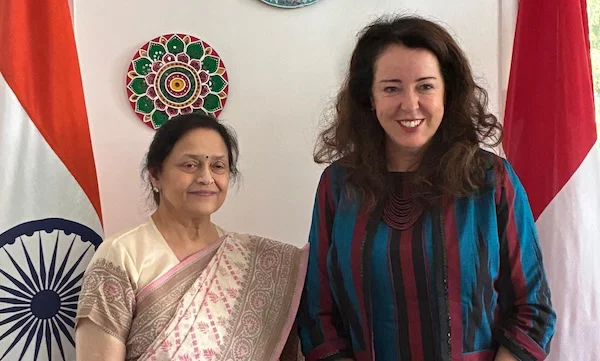
The JK Lakshmi Cement LC3 initiative moved forward on 20 May 2026 when Vinita Singhania, chairperson and managing director, JK Lakshmi Cement, met Maya Tissafi, Swiss ambassador to India and Bhutan, to discuss low carbon cement technologies and the development of sustainable construction materials in India. The meeting centred on scaling Limestone Calcined Clay Cement, known as LC3, which can reduce carbon dioxide emissions by up to 40 per cent compared to conventional cement. Both sides reviewed pathways to accelerate adoption of LC3 across infrastructure and housing projects, noting its relevance to India’s climate commitments and the construction sector’s decarbonization goals outlined by the Ministry of Environment, Forest and Climate Change.
JK Lakshmi Cement LC3 technology replaces a portion of clinker with calcined clay and limestone, lowering process emissions and fuel consumption during production. The material has been approved under Bureau of Indian Standards specifications, enabling commercial use across structural applications. JK Lakshmi Cement was among the first two cement producers in India to commercially manufacture LC3 after the standard was notified. The company has worked on the LC3 initiative since 2014 with research institutions including École Polytechnique Fédérale de Lausanne Switzerland, Indian Institute of Technology Delhi and Indian Institute of Technology Madras. Independent assessments by the Global Cement and Concrete Association show LC3 blends can cut embodied carbon in concrete without compromising strength or durability.
Commercial Launch Expands
Earlier in 2026, JK Lakshmi Cement commercially launched its Green Pro LC3 cement from the integrated Jaykaypuram plant in Rajasthan. The product targets ready mix concrete suppliers, builders and government infrastructure agencies seeking verified low carbon options. Company data indicates the Jaykaypuram unit has been retrofitted to handle calcined clay, with quality controls aligned to Bureau of Indian Standards norms for LC3. The launch positions the firm to supply large projects under green public procurement frameworks and private developments pursuing ratings from the Indian Green Building Council. Market uptake is expected to grow as developers track Scope 3 emissions and seek Environmental Product Declarations for materials.
Research Links Strengthen. The meeting also examined opportunities for further collaboration with Swiss research institutions including École Polytechnique Fédérale de Lausanne, Swiss Federal Laboratories for Materials Science and Technology, and Swiss Federal Institute of Technology Zurich in the development of low carbon construction technologies. Areas identified include optimization of clay activation, durability testing in Indian climates, and lifecycle assessment methods for LC3 concrete. JK Lakshmi Cement said sustained engagement with these institutes would help refine mix designs, scale production and train engineers on application practices. The collaboration aligns with India Switzerland innovation platforms supported by the Swiss State Secretariat for Education, Research and Innovation.
Adoption of JK Lakshmi Cement LC3 contributes to national targets to lower the cement sector’s carbon intensity, which accounts for nearly 7 percent of global CO2 emissions according to the International Energy Agency. LC3 requires lower kiln temperatures and uses widely available raw materials, reducing reliance on high grade limestone and imported coal. The technology also supports circularity by enabling use of local clays, creating rural value chains near plants. Industry bodies such as the Cement Manufacturers Association have flagged LC3 as a key lever in the sector’s 2070 net zero roadmap. For builders, the shift offers compliance with emerging carbon codes in urban development while maintaining cost parity over the lifecycle of structures.
Image Courtesy: Manufacturing Today