



Policy Shift
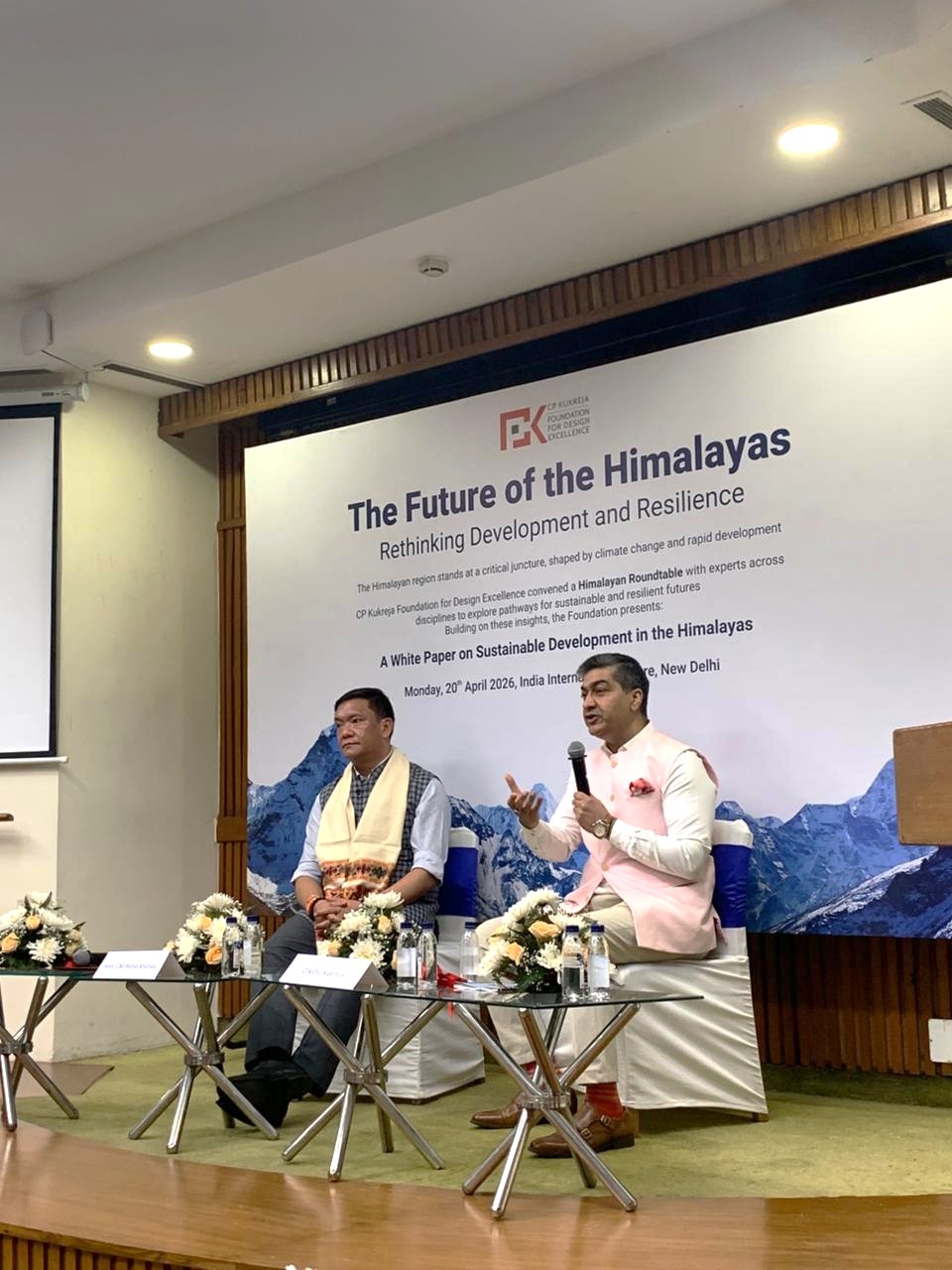
Released on the occasion of Earth Day in New Delhi, the White Paper titled ‘The Future of the Himalayas’ by the CP Kukreja Foundation for Design Excellence positions the Himalayan region at the centre of global sustainability and resilience discussions.
The report highlights the region’s critical role in supporting nearly 2 billion people, linking its ecological stability directly to water security, food systems, and climate balance across South Asia. The launch was attended by Pema Khandu, underscoring the policy relevance of the initiative.
Developed through a multidisciplinary roundtable, the White Paper reflects growing concern within the policy and infrastructure ecosystem over the increasing mismatch between development models and fragile mountain geographies. It notes a 15–20% rise in extreme rainfall events since the 1950s, alongside escalating landslide risks and infrastructure vulnerabilities—signalling systemic stress rather than isolated disruptions.
From a governance and planning perspective, the document calls for a shift from project-led development to system-level thinking. It advocates aligning infrastructure and policy decisions with watershed and basin-level ecological processes, integrating scientific data into governance, and adopting terrain-responsive design approaches.
Climate Risk
A key theme is the recognition of ecological carrying capacity as a non-negotiable factor in future development planning. The Himalayas are framed not as isolated terrains but as interconnected systems influencing 1.3–1.5 billion people downstream, reinforcing the need for cross-border and cross-sectoral coordination.
Industry and policy stakeholders are also urged to address structural gaps, including fragmented governance, underutilisation of scientific inputs, and increasing pressure from tourism and rapid urbanisation. Institutions such as NITI Aayog are seen as central to enabling a coordinated, mission-mode approach.
The White Paper ultimately positions itself as a strategic framework—calling for a long-term, resilience-driven development model that balances economic growth with ecological preservation, while embedding community participation and scientific planning at its core.