



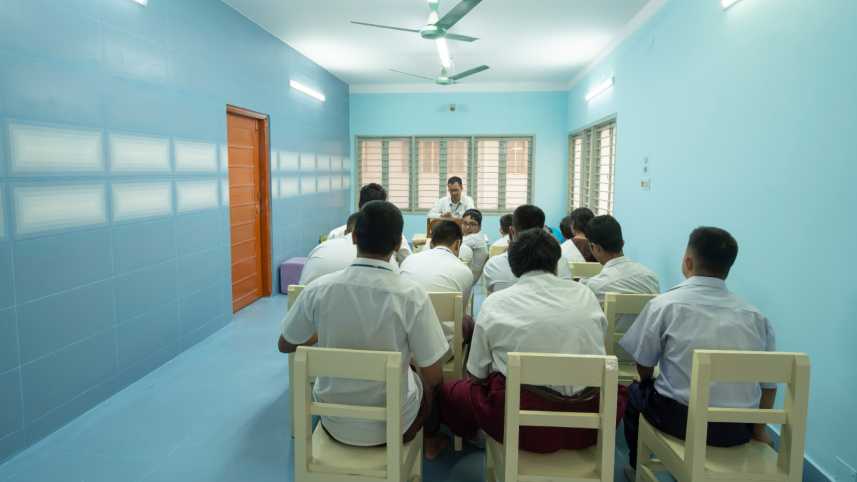
DBL Ceramics has introduced an autism-friendly tile collection titled “NeuroTiles” along with an inclusive design guideline, according to a press release issued 4 May 2026 and updated 5 May 2026. The initiative is based on research conducted over six months to understand preferences of children with autism in terms of colours, textures and patterns. The company said the guideline is open-source and available for public use. The research found that soft colours, matte textures, simple shapes and consistent patterns can support focus and reduce restlessness among children with autism. The study involved doctors, psychologists, teachers and designers, along with experts from Kalyani Inclusive School, National Institute of Neurosciences and Hospital and Sher-e-Bangla Medical College Hospital.
Research Findings
The study involved doctors, psychologists, teachers and designers, along with experts from Kalyani Inclusive School, National Institute of Neurosciences and Hospital and Sher-e-Bangla Medical College Hospital. Conducted over six months, the research identified that soft colours, matte textures, simple shapes and consistent patterns can support focus and reduce restlessness among children with autism. For architects and interior designers working on residential, healthcare, and educational projects, these findings translate into actionable material specifications that prioritize sensory comfort. The data-driven approach gives real estate developers and institutional clients clear parameters for specifying finishes that align with neuro-inclusive design principles, reducing guesswork in autism-friendly environments.
Design Application
DBL Ceramics said the guideline is intended to support the development of autism-friendly environments in homes and educational institutions. The open-source design guideline provides architects, interior designers, and facility planners with criteria for selecting surfaces that minimize visual and tactile overstimulation. NeuroTiles applies the research through soft colour palettes, matte finishes, simple shapes, and consistent patterns engineered to aid focus and calm. For construction teams and developers, the collection offers a specification-ready solution for inclusive housing, special education facilities, and therapy centers. Standard tile formats ensure ease of installation while meeting performance requirements for durability, maintenance, and safety in high-use spaces.
Industry Access
The company has made the guideline available online for free access. By publishing the inclusive design guideline as open-source, DBL Ceramics enables architects, designers, educators, and homeowners to implement autism-friendly strategies without proprietary barriers. The free access model encourages wider adoption across the architecture and construction sector, supporting inclusive design as a standard practice rather than a niche application. For real estate developers targeting inclusive communities or special-needs schools, the guideline offers a practical framework to align interiors with sensory needs, improving liveability and user comfort. The initiative positions material selection as a critical tool for social impact in the built environment.
Company Statement
Mohammad Bayazed Bashar, chief business officer of DBL Ceramics, said, “If even one child with autism feels comfortable in their own room for the first time, then this effort will be truly worthwhile.” The statement underscores the human-centered objective behind NeuroTiles and the accompanying design guideline. For the architecture and interior design community, the launch signals a shift toward evidence-based, inclusive product development that responds to neurodiversity in spatial planning. The combination of product and open-source knowledge base equips stakeholders across design, construction, and education to create environments that support focus, reduce restlessness, and enhance wellbeing for children with autism in homes and institutions.
Image Courtesy: The Daily Star