


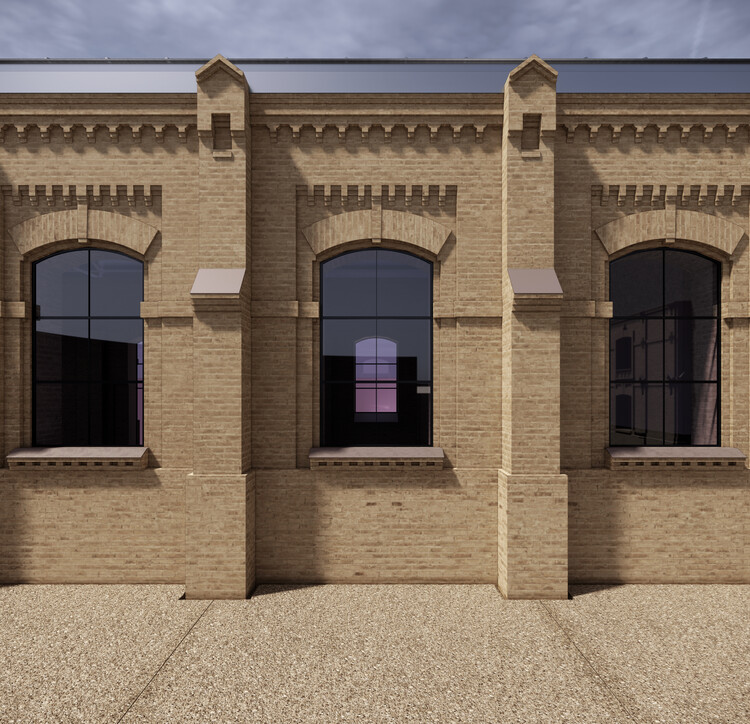
The Centre for Contemporary Arts Tashkent (CCA) is set to open in March 2026, marking a significant milestone in Central Asia’s cultural landscape. Led by the Uzbekistan Art and Culture Development Foundation (ACDF) and its chairperson Gayane Umerova, the CCA will be the first permanent institution dedicated to contemporary art and research in the region. Housed in a revitalized 1912 industrial building, the Centre will serve as a dynamic platform for cultural production and artistic exchange in Uzbekistan.
The CCA’s architectural approach, designed by French architecture firm Studio KO, emphasizes continuity between past and present. The building’s industrial character is retained while introducing new design elements that engage with traditional Uzbek materials and light-filtering motifs, creating spaces that are both contemplative and adaptable. Studio KO’s goal is to “honour the memory of a powerful industrial building while giving it a new poetic life”.
The Centre’s inaugural exhibition, “Hikmah” (meaning “wisdom” in Uzbek), will bring together major international and Uzbek artists, including Ali Cherri, Kimsooja, and Nadia Kaabi-Linke. The exhibition will feature recent works and new commissions, exploring wisdom across cultures and materials. Highlights include Kaabi-Linke’s “Flying Carpets”, on loan from the Solomon R. Guggenheim Museum, and Kimsooja’s participatory work “Archive of Mind”.
The CCA will offer residencies, youth initiatives, and professional development opportunities, alongside workshops and interdisciplinary labs. Two new annual events will be introduced in 2026: the multidisciplinary Navruz Gala and the citywide Tashkent Public Art Festival. These initiatives will establish the Centre as a dynamic platform for cultural production and exchange, fostering new connections between Uzbekistan and the wider world.
The CCA has revitalized two heritage sites in Tashkent’s old city as artist residencies, hosting five participants per intake. The program encourages engagement with an international network of creatives and mentors while collaborating with local communities and Uzbek artisans. The residencies will preserve the historic identity of the mahallas while developing Uzbekistan’s creative economy.
The Uzbekistan Art and Culture Development Foundation has announced the groundbreaking of the National Museum of Uzbekistan, designed by Japanese architect Tadao Ando. Additionally, Cross Works has revealed plans for New Tashkent, a large-scale urban expansion that will extend the capital’s boundaries and reshape its metropolitan fabric.
Image Courtesy: archdaily.com