


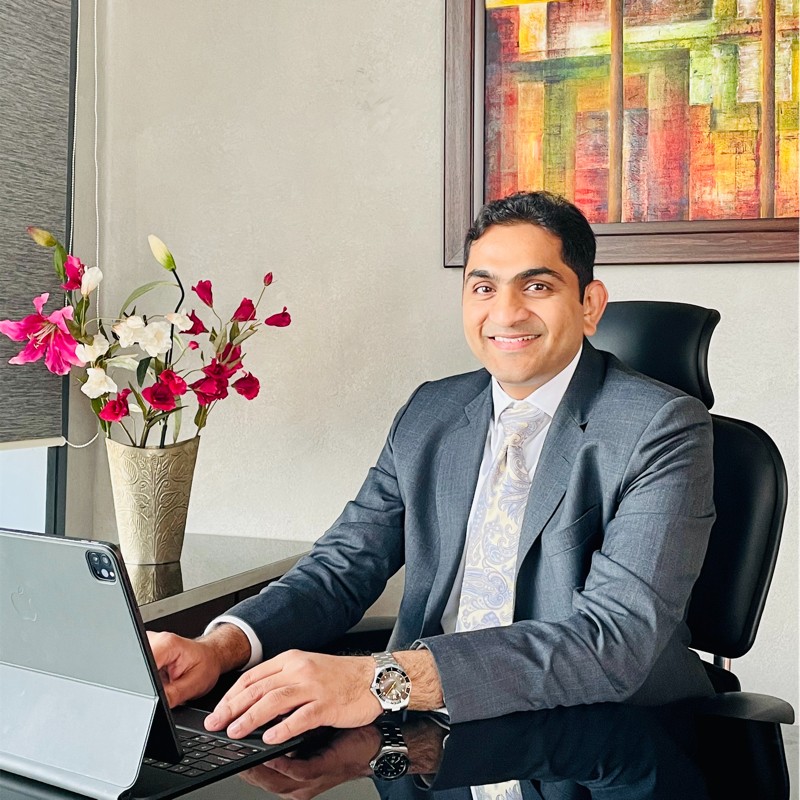
By Mr. Vikas Jain, CEO, Labdhi Lifestyle Limited
India’s technology and start-up ecosystem has moved well beyond a phase of rapid expansion, it has become a defining force in how our cities evolve. Over the past decade, I have seen a clear shift in how office spaces are perceived. It is no longer about simply leasing square footage; it is about creating environments that mirror ambition, adaptability, and long-term vision. This transformation is particularly visible in Mumbai’s Bandra Kurla Complex (BKC), and more specifically within its emerging H-Block precinct. What was once conceived as an alternative business district has steadily grown into one of India’s most influential commercial hubs. Today, it is not just home to financial institutions and multinational corporations, but also to a new generation of companies that are reshaping expectations from the ground up.
From my perspective, what distinguishes this new wave of occupier technology firms, fintech platforms, and growth-stage enterprises, is the way they approach work itself. These are organisations that value collaboration over hierarchy and agility over rigidity. Naturally, the spaces they inhabit must reflect this mindset. The office is no longer a static environment; it is a living ecosystem.
BKC’s evolution into an innovation-driven ecosystem has been gradual but deliberate. Its institutional strength, built over years through the presence of global banks and regulatory bodies, has created a foundation of credibility. Now, as new-age companies enter this landscape, they are not just occupying space, they are redefining it. In areas like H-Block, where infrastructure upgrades and mixed-use developments are underway, we are witnessing the emergence of a more integrated and future-ready business environment.
One of the most significant changes I have observed is the role of architecture in shaping corporate identity. Earlier, commercial buildings were designed with a primary focus on efficiency standardised layouts, repetitive façades, and predictable forms. While functional, they rarely conveyed a sense of individuality. Today, that approach no longer holds relevance. Companies want their office spaces to reflect who they are. This has led to a fundamental rethinking of design. Buildings are now conceived as expressions of brand philosophy. We are seeing more sculptural forms, layered façades, and dynamic elevations that create a sense of movement and depth. In emerging micro-markets like H-Block, architecture is not just responding to the skyline, it is actively shaping it.
Equally important is the emphasis on flexibility. Start-ups and technology companies grow at an unprecedented pace. A workspace requirement today can multiply within a short span of time. This growth trajectory demands office environments that can evolve without friction. In response, modern developments are prioritising larger, column-efficient floor plates, higher floor- to-ceiling heights, and modular layouts that can adapt to changing needs. Hybrid work models have further accelerated this shift, making it essential to integrate collaboration zones, breakout spaces, and digital infrastructure seamlessly into the design. Formed by these demands, the office is no longer confined to a nine-to-five function, it becomes a dynamic, responsive environment.
However, design alone does not define the success of a business district. Infrastructure plays an equally critical role. In my view, what sets BKC apart and what continues to strengthen areas like H- Block, is the depth of connectivity and urban planning. Improved road networks, better pedestrian movement, and proximity to transit systems create a sense of accessibility that is crucial for modern businesses. For global technology companies, these factors are not secondary considerations. Ease of commute, surrounding amenities, and overall ecosystem efficiency directly influence decision-making. As infrastructure continues to improve, it enables developers to think more ambitiously, and in turn, elevates the overall quality of commercial developments.
Another area that has become central to office design is sustainability. Today’s occupiers are far more conscious of environmental impact than ever before. ESG commitments, global benchmarks, and investor expectations have made sustainability an integral part of the design process. This is reflected in the increasing adoption of high-performance façades, energy-efficient materials, and design strategies that optimise natural light while reducing energy consumption. In premium commercial districts like BKC, sustainability is not an added feature, it is a baseline expectation. More importantly, it directly impacts tenant retention, operational efficiency, and long-term asset value.
What I find particularly interesting is the growing importance of amenities within commercial environments. Offices are no longer isolated structures; they are part of a broader experience. Cafés, retail spaces, landscaped zones, and pedestrian-friendly planning are becoming essential components of next-generation developments. In H-Block, this transition is already underway. The area is gradually evolving from a purely transactional business zone into a more vibrant, experience-driven precinct. These elements not only enhance employee engagement but also contribute to the overall attractiveness of the location for companies looking to establish a strong presence.
Looking ahead, I believe India’s growth story driven by its start-up and technology ecosystem, is far from complete. As companies mature and global integration deepens, the demand for well-designed, strategically located, and infrastructure-backed office spaces will only increase. In this context, districts like BKC, and emerging pockets such as H-Block, are uniquely positioned to lead the next phase of commercial development. The future will not be defined by scale alone, but by how effectively spaces can adapt, perform, and create lasting value.
Ultimately, the role of architecture in this transformation cannot be overstated. It is no longer just about constructing buildings, it is about shaping environments that enable innovation, reflect ambition, and stand the test of time. As our business districts continue to evolve, the office will remain at the centre of this journey, not just as a place to work, but as a catalyst for growth itself.
About the author
Vikas Jain is a Mumbai-based real estate developer known for its focus on execution excellence and timely delivery. With over a decade of experience, he has led the delivery of over 1 million sq. ft. of real estate, establishing the company as a trusted name in the Mumbai Metropolitan Region.