



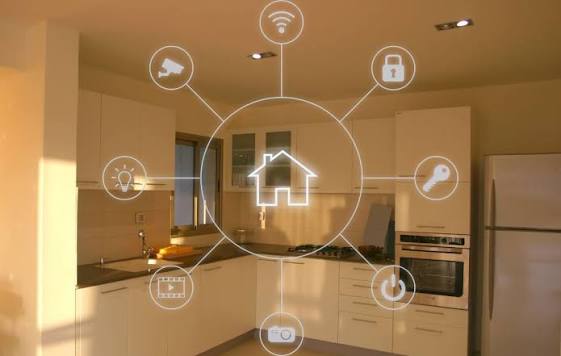
The global Smart Lighting Market Analysis reveals a sector on a significant growth trajectory, poised for substantial expansion over the next several years. According to recent industry reports, the market, valued at United States Dollar 9.86 billion in 2025, is projected to reach United States Dollar 17.38 billion by 2030, demonstrating a robust compound annual growth rate of 12.0 percent. This impressive growth is fueled by a convergence of technological advancements, regulatory support, and shifting consumer demands. A comprehensive Smart Lighting Market Analysis indicates that the industry is moving beyond simple illumination to become an integral component of smart homes, intelligent buildings, and connected city infrastructures, where energy efficiency, automation, and data-driven insights are paramount.
IoT and AI Reshape Lighting Landscape
The proliferation of the Internet of Things and advancements in artificial intelligence are pivotal in reshaping the smart lighting landscape. Smart lighting systems, which include Light Emitting Diode luminaires, advanced sensors, and sophisticated control software, now offer capabilities like adaptive illumination based on occupancy and daylight, remote monitoring, and predictive maintenance. This evolution is a central theme in any contemporary Smart Lighting Market Analysis, highlighting a shift from basic connectivity to intelligent, self-optimizing networks. The integration of these systems with building management platforms and smart home ecosystems such as Amazon Alexa and Google Assistant is driving demand across residential, commercial, and industrial sectors, creating a more dynamic and interconnected market environment.
Industry Trends Shaping the Smart Lighting Market
Current Smart Lighting Market Analysis highlights several key trends that are shaping the industry’s future. One of the most prominent is the rapid expansion of smart city initiatives globally, which are accelerating the deployment of connected and energy-efficient lighting systems. Governments and municipalities are major adopters, utilizing smart streetlights to improve public safety, reduce energy consumption, and gather valuable urban data. These projects often represent large-scale implementations that serve as a catalyst for innovation and standardization. Furthermore, the rising demand for human-centric lighting solutions in commercial and residential spaces is another powerful trend, with a focus on tunable lighting that supports circadian rhythms to enhance well-being, productivity, and comfort.
Another significant trend is the transition from traditional hardware-centric models to integrated hardware, software, and services ecosystems. While hardware including lights, luminaires, and controls currently dominates the market share, the services segment comprising installation, maintenance, and managed lighting solutions is expected to exhibit the highest growth rate. This shift indicates that end-users are increasingly seeking comprehensive solutions that ensure long-term performance and energy efficiency. The market is also witnessing a strong push toward wireless communication technologies like Zigbee and Bluetooth Low Energy due to their flexibility and ease of deployment, although wired technologies like Digital Addressable Lighting Interface and Power over Ethernet remain crucial for reliable, large-scale commercial applications.
Key Market Drivers and Opportunities
The growing implementation of smart city projects is a primary driver, creating demand for connected and energy-efficient lighting. Advancements in artificial intelligence and edge computing are enabling more intelligent, responsive, and autonomous lighting systems. Rising consumer demand for energy efficiency and sustainability, coupled with supportive government regulations, is accelerating adoption. Emerging trends in smart offices, smart retail, and human-centric lighting are creating significant new opportunities for market players. Increasing penetration of Internet of Things integrated solutions is enabling data analytics, predictive maintenance, and enhanced operational efficiency across the value chain.
Competitive Landscape of the Smart Lighting Market
A detailed Smart Lighting Market Analysis reveals a moderately consolidated competitive landscape, dominated by a mix of established global conglomerates and innovative specialists. Key players are focusing on product innovation, strategic partnerships, and geographic expansion to maintain their market positions. Prominent companies such as Signify Holding from the Netherlands, Acuity Brands, Incorporated from the United States, Legrand from France, and Honeywell International Incorporated from the United States are at the forefront, leveraging their extensive product portfolios, strong brand recognition, and advanced research and development capabilities to introduce cutting-edge solutions. These industry leaders are actively integrating Internet of Things technologies, energy-efficient systems, and seamless connectivity into their offerings.
Future Outlook and Market Forecast
The future outlook for the Smart Lighting Market is exceptionally bright, characterized by sustained double-digit growth and continuous technological evolution. The Smart Lighting Market Analysis indicates that the market is projected to grow from United States Dollar 9.86 billion in 2025 to United States Dollar 17.38 billion by 2030. This optimistic forecast is underpinned by the enduring drivers of urbanization, smart city development, and the global imperative for energy efficiency. As Light Emitting Diode costs continue to decline and the return on investment for smart lighting projects becomes increasingly attractive, adoption is expected to accelerate across all major regions and end-use applications. The Asia Pacific region is expected to register the highest compound annual growth rate, driven by rapid urbanization, strong government support for smart city initiatives, and increasing adoption of Internet of Things technologies in countries like China and India.
Image Courtesy: iotty Smart Home