


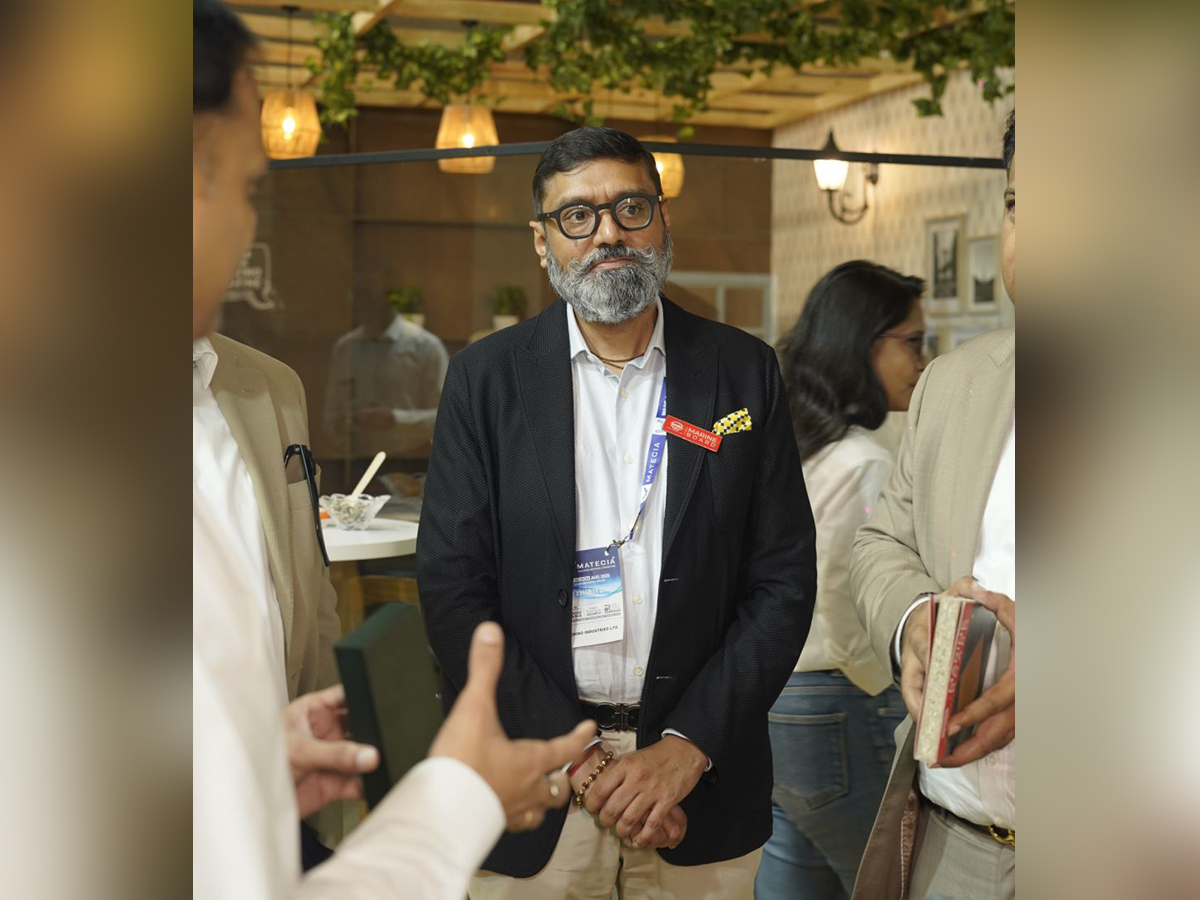
At the heart of India’s laminate industry, Merino has built itself into one of the most recognisable names in interior solutions. Today, it stands as one of the top three laminate brands in the country, but the journey has been defined by much more than market share. Manoj Lohia, Director, Merino Industries Ltd, says, the company’s story has always been anchored in values, innovation and responsibility.
The Three Pillars
When asked what sets Merino apart in a crowded market, Lohia didn’t hesitate. “If you look at our motto, it really sums us up: Economy, Excellence, Ethics. That’s the framework we operate on.” He explained that economy is not simply about being cost-effective. “It’s about economies of scale. We pass on the benefits of our scale to customers. That creates real value,” he added. Excellence, on the other hand, has been about keeping the company at the forefront of technological change. Lohia cited the example of the Marine Board, an industry-first innovation from Merino, but pointed out that this was just one among many firsts the company has introduced over the years. The third pillar, ethics, is where Lohia’s tone became more emphatic. “By ethics, we mean doing business the right way. That’s been a constant for us. You can say these three, economy, excellence, ethics, are what really set us apart from the industry.”

Sustainability as a Philosophy
Sustainability, an area where many companies are only now beginning to respond to regulatory and consumer pressure. Merino, Lohia stressed, has been on this path much longer. “For us, sustainability is not a recent initiative. It is something ingrained in our philosophy. And we don’t just talk about it, we walk the talk,” he said. Lohia detailed several green initiatives, from water conservation to energy efficiency. “As a matter of fact, we are working to be water neutral with an endeavour that we put back more water than we consume. But sustainability at Merino is not limited to manufacturing. Corporate social responsibility has long been part of its ethos, well before government mandates made CSR compulsory. “We took up TB Health Program along with DoT around our factory in Hapur, Uttar Pradesh because it had become a silent epidemic. Over the years, we’ve helped cure six thousand plus people in the surrounding communities while monitoring another ten thousand plus from continuous OPD program ” Lohia explained.
Education is another area close to the company’s heart. Merino runs Swami Vivekananda Arunoday Vidyalaya at Hapur where students school for children from underprivileged backgrounds. The school currently has 157+ students, with a special emphasis on the education of the girl child, ensuring that young girls from disadvantaged backgrounds are not left behind in pursuing their aspirations. “One of our students recently cracked IIIT. Imagine what a leap that is for a child from such a humble background.” Lohia shared with pride. Along with academics, Merino ensures education and nutritional needs are both addressed through its structured meal programme, which provides breakfast, lunch, and supper to every child. The company’s efforts also extend beyond primary schooling. Students who have graduated from the school continue to attend special guidance classes on higher studies, ensuring long-term academic support. Additionally, Merino offers the Yogakshema Scholarships for bright but underprivileged students pursuing medicine and engineering. More than 30 students have already benefitted from this initiative, each receiving Rs. 50,000 annually to aid their education.
Innovation Hardwired
Lohia is quick to describe Merino as a product company at its core. “We have always been hardwired for product innovation. That’s in our DNA. Even years ago, when we were not directly customer-facing, our focus was always on the product.” This orientation has enabled Merino not just to lead in India but also to make a mark internationally. Unlike other Indian manufacturers who largely exported commodity laminates, Merino decided to challenge established European players in their own backyard with value-added products. “It wasn’t just about cheaper labour or cost advantage. We wanted to show that Indian products could compete on technology and quality too,” he noted. The company has also excelled its portfolio into other verticals. Restroom cubicles, for example, were pioneered by Merino in India. “There was a time when we had a 90 per cent share of that market because no one else was offering it. Even today, if you walk into any major airport or stadium, chances are you’re using a Merino restroom partition system.” Furniture solutions and panels have followed a similar path, often as forward integrations. “We make our own chipboard, which feeds into our furniture solutions” Lohia said.
Loyalty in the Channel
If innovation is one side of the Merino story, relationships are the other. Lohia pointed out that nearly 70 to 80 per cent of the company’s sales come through its dealer network, with the balance coming from B2B. “Dealers have been our strength. I recently spoke to one who has been with us for 42 years. That’s two generations in the business. I myself have seen second-generation entrepreneurs taking over dealerships.”