



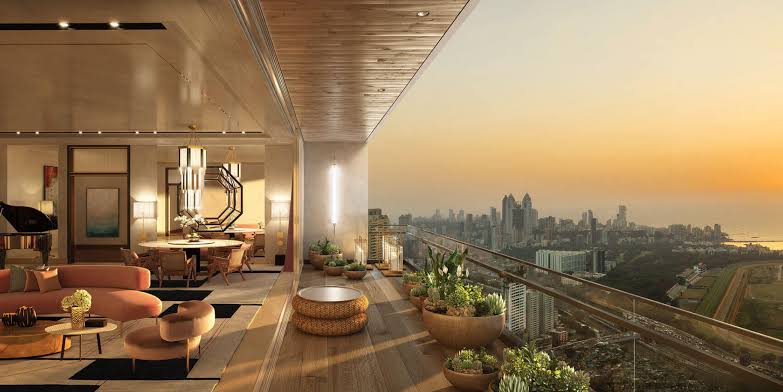
According to Business Standard, hospitality companies in India are zeroing in on branded residences as the next big growth frontier, as demand for luxury and lifestyle-driven living spaces begins to outpace supply. Global giants such as Marriott International and homegrown leader Indian Hotels Company Limited (IHCL) are aggressively expanding their presence in this high-potential segment, which blends residential real estate with the credibility and service promise of established hotel brands.
A branded residence typically integrates a hotel with a set of managed residential units, all carrying the same global brand identity. Buyers not only invest in premium real estate but also gain access to world-class services, ranging from concierge and housekeeping to dining and wellness facilities—a value proposition that is resonating with India’s rising affluent class and global investors.
IHCL, the hospitality arm of the Tata Group, is among the most active players eyeing this space. “Apart from the luxury and midscale segments, I firmly believe that branded residences will gain traction. That is how the market is evolving, and we are going to do more of it now,” said Puneet Chhatwal, MD & CEO of IHCL. The company has already rolled out projects under its marquee Taj brand and plans to accelerate development in collaboration with leading real estate partners.
International chains are equally bullish. Marriott International, which operates the Ritz-Carlton Residences and other premium branded projects globally, has been steadily scaling in India, targeting gateway cities and high-demand leisure destinations. Branded residences allow hotel operators to diversify revenues, build asset-light models, and create long-term brand stickiness—advantages that have become increasingly vital in a post-pandemic market defined by evolving consumer expectations.
Industry analysts note that India’s branded residences market is still in its early stages but could see exponential growth as urbanisation, wealth creation, and lifestyle aspirations converge. “Hospitality companies are uniquely positioned to capture this demand,” said a senior consultant at a leading real estate advisory. “Their experience in service delivery, brand equity, and global networks give them a strong advantage over pure-play real estate developers.”
For hotel chains, the model also serves as a hedge against the cyclicality of traditional room revenues. By selling residences upfront and charging recurring management fees, hospitality groups are able to build resilient revenue streams while deepening consumer engagement with their brands.
With affluent homebuyers seeking not just luxury but also the assurance of service, security, and exclusivity, branded residences are emerging as a natural extension of hospitality’s core strengths. For India’s hotel majors, they represent more than just a new business vertical—they are a way to future-proof growth, expand into lifestyle real estate, and cement their role in shaping how India’s elite live, work, and play.
India’s Branded Residences Sector
India’s branded residences market is projected to grow 60% over the next five years, spurred by demand from high-net-worth individuals and NRIs. Currently, India accounts for 8% of Asia’s USD 60 billion branded residence market, placing it among the top six nations in the region.
Market research by Savills shows a 160% growth in this sector over the last decade, with projections indicating it will reach USD 5 billion by 2025. Demand is now spreading beyond traditional hubs like Mumbai and Delhi to tier-2 and tier-3 destinations such as Pune, Bhubaneswar, Hyderabad, Ahmedabad, and Chandigarh.
Why Branded Residences Appeal
For hotel operators, branded residences offer a scalable, asset-light model that deepens customer relationships. These residences generate recurring management income, enhance brand loyalty, and transform buyers into lifetime brand ambassadors. For affluent homeowners, they promise trust, premium amenities, and legacy value.
As India’s luxury real estate landscape evolves, hospitality-backed residences are becoming the gold standard for those seeking both home ownership and high-end life experiences. For hotel majors, this isn’t just a business move—it’s a strategic pivot into the future of urban luxury living.