


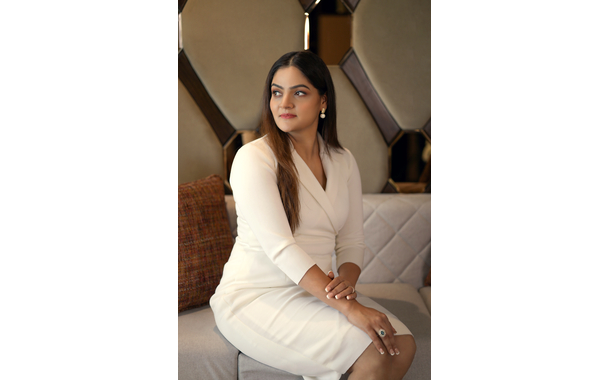
With a distinguished presence across Indian real estate and luxury hospitality verticals and strong roots in tier II growth centers such as Jaipur, along with a recent strategic diversification into the high-stakes Mumbai redevelopment market, Manglam Group is at a pivotal juncture. In an exclusive interview with Asmita Mukherjee, Amrita Gupta, Chief Interior Designer & Director, Manglam Group offers her expert perspective on the booming demand for premium and mixed-use developments, the strategic rationale behind Manglam Group’s expansion, and how the group is fundamentally integrating wellness, green design, and responsible luxury across its residential and hospitality portfolios, including major collaborations with brands like The Westin and The Fern.
India’s real estate sector is experiencing strong momentum, especially across tier – II cities like Jaipur. What growth projections do you foresee for the city’s residential, commercial and mixed-use landscape?
Jaipur is entering a very stable and opportunity-rich phase of growth. Residential demand in the city is rising at a healthy pace, particularly in the premium and upper mid-segment, where families are prioritising larger layouts, better ventilation, and community-led environments. According to ANAROCK, tier-II cities like Jaipur have seen a 25–30% rise in housing demand over the past two years, led by end-user confidence and improved infrastructure. On the commercial front, office absorption in tier-II markets grew nearly 20% year-on-year, supported by flexible offices, GCC expansions and the rise of remote-first companies looking for cost-effective, talent-rich cities. Jaipur fits squarely into this shift with its connectivity, workforce and affordability advantage.
The real momentum, however, is in mixed-use developments. With India’s organised retail market projected to reach INR 7.8 lakh crore by 2027 (CBRE), integrated ecosystems that combine residential, retail and hospitality are seeing accelerated traction. Jaipur’s urban evolution now mirrors the aspirations of rising tier-II India, and we expect mixed-use formats to be one of the fastest-growing categories in the next three to five years.
Manglam Group’s recent entry into Mumbai’s redevelopment market marks a major diversification. What strategic factors influenced the decision?
Mumbai offers a unique blend of scale, depth and recurring demand. The redevelopment segment in particular aligns well with our strengths in planning, execution and community-focused development. We chose to enter the Mumbai Metropolitan Region because it allows us to work in a highly structured regulatory environment, diversify our portfolio and contribute meaningfully to the city’s urban renewal. Our intent is to bring Manglam’s design sensitivity, transparency and delivery discipline to a market where these qualities create significant long-term value.
Consumer preferences are shifting towards spacious layouts, wellness amenities and green design. How is Manglam adapting its product strategy?
Across all our projects, there is a clear movement toward spatial comfort, natural light, ventilation and wellness-led amenities. We are designing homes with more flexible spaces, dedicated work corners, outdoor decks and green terraces that reflect contemporary living patterns. Wellness has become a core part of our planning and we are integrating meditation gardens, fitness trails, air purification landscapes and low-noise building systems. Green design is no longer an add on. It is a fundamental expectation and we are embedding climate-smart materials, solar integration and water-efficient systems into every new project.
Hotel demand is expected to outpace supply in India over the next three years. What opportunities does this unlock for Manglam’s hospitality portfolio?
The demand-supply gap creates an exciting window for high-quality, experience-led hospitality. For us, this means strengthening our portfolio with properties that combine nature, design and wellness. India’s hospitality market is maturing and travellers are seeking quieter, intuitive and culturally rooted destinations. This aligns perfectly with our long-term vision of building serene, design-forward retreats. The opportunity is not only in rooms but in weddings, wellness, food and beverage and immersive experiences. Jaipur in particular is poised to benefit from this demand surge.
Manglam has a strong footprint across verticals. How is the group creating integrated ecosystems that enhance liveability, tourism and economic vibrancy?
We are consciously moving toward developments that function as complete ecosystems. This means blending residential life with retail convenience, green landscapes, cultural spaces and hospitality-led experiences. When homes, hotels and commercial spaces are planned cohesively, they elevate the quality of life for residents, attract tourism and create sustained economic activity. Our goal is to create neighbourhoods that remain active throughout the year and contribute meaningfully to Jaipur’s urban identity.
How does Manglam envision its role in shaping Jaipur’s next phase of development?
Jaipur is at an inflection point. As a long-term stakeholder in the city, we see our role as creators of thoughtful, future-ready spaces that respect culture and embrace innovation. This means focusing on premium residential living, hospitality-led destinations and mixed-use pockets that support tourism and economic growth. We aim to contribute to Jaipur’s evolution into a global cultural and lifestyle hub while retaining the warmth and identity that make the city unique.
How is Manglam incorporating green design, energy efficiency and climate-responsive architecture?
Sustainability informs every stage of our design process. We are integrating passive cooling, sun orientation, cross-ventilation and heat-resistant materials to minimise energy consumption. Solar power, rainwater harvesting, sewage treatment and low-flow fixtures are standard inclusions across our upcoming projects. We are also working with architects who understand climate-responsive planning so that our buildings remain comfortable throughout the year with minimal environmental impact. Sustainability for us is not symbolic. It is measurable and long-term, and at Manglam, it remains central to everything we do.
With rapidly growing cities, what new architectural and planning philosophies is Manglam Group adopting for future-ready spaces?
Our planning approach is shifting toward creating environments that feel cohesive and socially connected. Growing cities need neighbourhoods that encourage interaction, offer accessible open spaces and allow people to meet most of their daily needs within a comfortable radius. In more saturated urban settings, our focus is on intelligent design and efficient land use so that every square foot adds value to the way people live and work.
Across all locations, we are prioritising sustainability in a very practical way. This includes climate-responsive layouts, thoughtful landscaping, water-efficient systems and materials that improve long-term durability. These aspects are now built into the foundation of every project rather than treated as enhancements. We are also integrating hospitality-led thinking into our developments. Our experiences with global hotels have shown us how comfort, service planning and a sense of arrival can significantly elevate a space. As we grow, we remain open to more partnerships in hospitality that align with our commitment to creating places that are functional, warm and community focused. Our goal is simple. We want to build environments that support modern living, strengthen communities and contribute positively to the city’s long-term growth.
asmita.mukherjee@saffronsynergies.in