


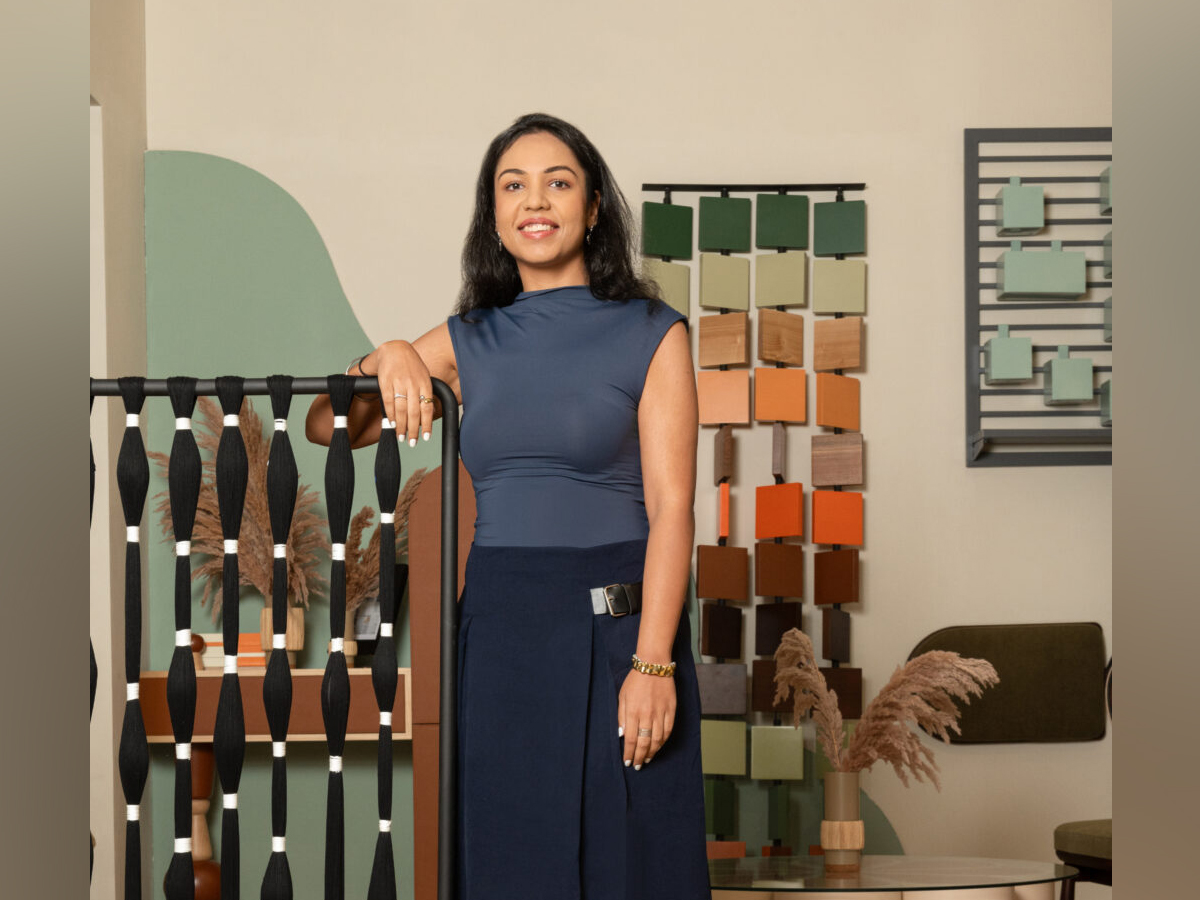
Over the next five years, the focus will be on strengthening MOHH’s identity as a contemporary Indian design house, expanding its product capabilities and building stronger relationships with the architecture and design community, says Pritika Singh, Founder of MOHH, in a conversation with Prasenjit Chakraborty.
Q1. MOHH positions itself as a designer furniture brand made in India. In an increasingly competitive furniture market, how do you see MOHH differentiating itself from both established international design brands and emerging Indian furniture companies over the next five years?
At MOHH, our focus has always been on creating original furniture that is designed and manufactured in India. We believe Indian brands have the design talent, technical capabilities and craftsmanship to compete with international names, and that is the belief on which MOHH was founded in 2020.
What differentiates us is our ability to bring design and manufacturing together. We have an in-house design studio supported by a 1,50,000 sq. ft. manufacturing facility in Gurugram, allowing us to oversee the entire process, from concept development and material selection to production and finishing.
Another important differentiator is customisation. Today’s consumers are increasingly looking for furniture that reflects their individual preferences rather than standardised designs. For our residential customers, we offer flexibility across dimensions, materials, fabrics and finishes. For architects and interior designers, we extend this approach to fully bespoke furniture and project requirements.
Over the next five years, our focus will be on strengthening MOHH’s identity as a contemporary Indian design house, expanding our product capabilities and building stronger relationships with the architecture and design community.
Q2. MOHH combines contemporary design with Indian manufacturing. How do you balance design innovation, craftsmanship, material quality and manufacturing efficiency while ensuring that every product delivers a consistent premium experience?
For us, design and manufacturing are not separate processes. They work together from the initial stages of product development. Having our design team and manufacturing operations under one roof allows us to understand how a concept will translate into a finished product, both aesthetically and functionally.
Our manufacturing facility is supported by approximately 250 craftspeople across seven specialist workshops, covering processes such as carpentry, metalwork, upholstery and finishing. This gives us the flexibility to experiment with materials, explore new forms and develop customised solutions while maintaining oversight of production.
We also believe that good design must go beyond appearance. Proportions, comfort, durability, material selection and functionality are equally important. A piece may look beautiful, but it must also work well within the space and withstand everyday use.
Our integrated model allows designers and production teams to work closely together, address practical challenges during development and maintain consistency across different products. Ultimately, our aim is to create furniture where thoughtful design, craftsmanship and functionality come together naturally.

Q3. As demand for distinctive, design-led furniture grows in India, what are the biggest opportunities and challenges in scaling MOHH’s manufacturing capacity, distribution network and customer reach without compromising its design philosophy or quality standards?
One of the biggest opportunities is the changing mindset of Indian consumers. Furniture is increasingly being viewed as an important part of a home’s identity rather than simply a functional purchase. Consumers are paying greater attention to design, materials, comfort and how individual pieces complement their living spaces.
We are also seeing opportunities beyond residential furniture. Architects, interior designers and commercial clients are looking for manufacturing partners who can translate specific design requirements into finished products. This creates opportunities across hospitality, workplaces, retail and institutional projects.
MOHH began as a digital-first brand and has since expanded its physical presence through experience spaces in Delhi and Gurugram. We have also broadened our offerings to include modular kitchens, wardrobes, vanities and bespoke project solutions.
As a business grows, the challenge is maintaining the same attention to detail across a larger and more diverse range of requirements. Customisation adds another layer of complexity because every project can involve different dimensions, materials and technical specifications.
Our approach is to build on our existing manufacturing capabilities while ensuring that design quality and execution remain central to every decision. Growth is important, but we do not want it to come at the cost of what makes MOHH distinctive.
Q4. Sustainability is becoming increasingly important in the furniture industry. How is MOHH incorporating responsible material sourcing, waste reduction, durability and circular design into its manufacturing processes, and how do you see these initiatives influencing the brand’s long-term competitiveness?
Sustainability is an important conversation for the furniture industry, particularly because furniture involves significant material use and products are often expected to remain in homes and commercial spaces for many years.
At MOHH, we believe durability and thoughtful design are important starting points. Our approach is to create furniture that is not driven entirely by short-lived trends but is designed to remain functional and relevant over time.
Having design and manufacturing within the same ecosystem also gives us the opportunity to consider material choices, production requirements and practical execution early in the development process. This is particularly important in customised furniture, where dimensions, finishes and material specifications can vary considerably.
We believe the industry needs to move towards more responsible material consumption, better resource utilisation and products that are made for longer-term use. These considerations will become increasingly important as consumers and commercial clients pay closer attention to the environmental impact of their purchases.
For us, the long-term opportunity lies in continuing to strengthen our processes while creating furniture that balances aesthetics, functionality, quality and longevity.
Q5. India has a rich tradition of craftsmanship alongside a rapidly evolving contemporary design culture. What role do you believe MOHH can play in establishing Indian-designed furniture as a globally recognised category, and what strategic priorities will be essential to achieving that ambition?
India has a strong foundation in craftsmanship and manufacturing, but for a long time, international design has often been viewed as the benchmark for premium furniture. I believe that perception is gradually changing.
We have talented designers, skilled craftspeople and increasingly sophisticated manufacturing capabilities. What is important now is building brands that bring these strengths together and develop a recognisable contemporary Indian design identity.
That is what we are working towards at MOHH. Our philosophy is rooted in the belief that original furniture can be designed and made in India while meeting the expectations of a design-conscious audience.
For Indian furniture brands to gain greater international recognition, I believe three things will be important: developing original design languages, maintaining consistent quality and building stronger connections between designers and manufacturers.
We also need to move beyond simply being recognised for production capabilities and establish India as a source of original design thinking.
For MOHH, our priority is to continue developing our design capabilities, strengthen our manufacturing expertise and collaborate more closely with architects and interior designers. We want to contribute to a future where Indian-designed furniture is recognised for its originality, craftsmanship and quality, both within India and internationally.