



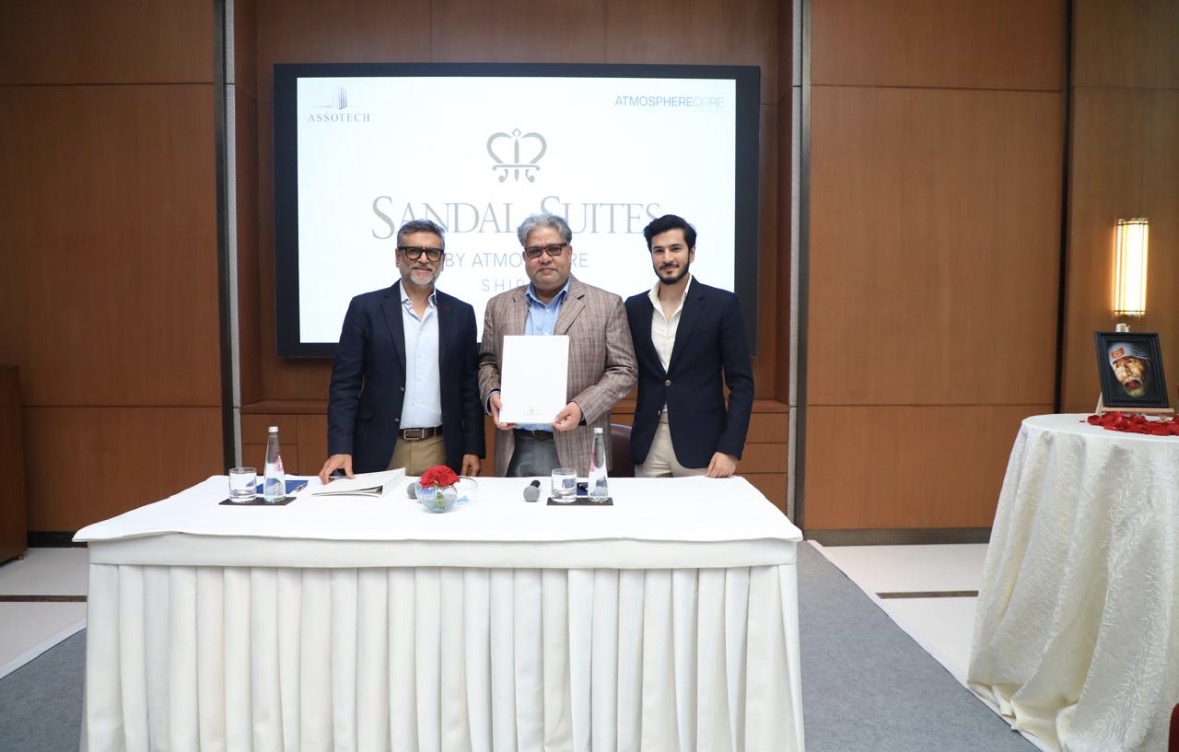
A Contemporary Hospitality Project Planned in Shirdi
A new hospitality development in Shirdi, Maharashtra, is set to introduce a design-forward accommodation concept in one of India’s most visited spiritual destinations. Assotech Realty has announced a strategic collaboration with Atmosphere Core to develop an all-suite hotel that aims to combine contemporary hospitality design with the cultural ethos of the temple town.
The project signals a shift in the architectural narrative of pilgrimage destinations, where hospitality infrastructure is gradually evolving from basic lodging formats to thoughtfully designed spaces that offer comfort, aesthetic coherence, and experiential value.
Under the agreement, Atmosphere Core will operate and manage the property once completed, bringing its hospitality expertise to the development.
Architecture Responding to Spiritual Tourism
The upcoming project is planned as a 160-suite property, with each suite spanning approximately 45 square metres, offering spacious accommodation rarely seen in temple-town hotels.
Promoted by Neeraj Gulati, Managing Director of Assotech Realty, the development represents an investment of around INR 200 crore. From a design perspective, the project aims to balance contemporary hospitality planning with the spiritual character associated with Shirdi.
Located near the revered Shirdi Sai Baba Temple, the property is expected to serve a diverse mix of pilgrims, spiritual travellers, and leisure visitors seeking more refined accommodation experiences.
As pilgrimage destinations become more structured tourism ecosystems, architects and hospitality designers are increasingly exploring how built environments can reflect serenity, cultural symbolism, and modern comfortsimultaneously.
Designing Larger Living Spaces for Pilgrimage Travel
One of the defining aspects of the project is its all-suite configuration, which reflects changing travel patterns among visitors to Shirdi. Larger rooms are being incorporated to accommodate extended stays, family groups, and international devotees who prefer more residential-style hospitality environments.
Such spatial planning responds particularly to NRI and HNI travellers, who increasingly seek hotels that combine spiritual proximity with luxury living standards.
From an architectural standpoint, the larger suite format allows designers to introduce layered spatial experiences, including lounge areas, extended bedroom zones, and thoughtfully designed interiors that prioritise comfort and privacy.
The approach reflects a broader hospitality design trend where guest rooms function more like private retreats rather than traditional hotel units.
Hospitality Design for India’s Temple Towns
Shirdi, home to the revered Sai Baba of Shirdi, attracts nearly 25 million devotees annually, making it one of India’s most significant spiritual tourism centres.
In recent years, improved connectivity, airport access, and infrastructure investments have begun reshaping the town’s urban environment. As a result, hospitality developments are increasingly being conceptualised not just as accommodation blocks but as integrated design experiences that support tourism growth.
Projects like the Assotech–Atmosphere Core collaboration reflect how architecture is adapting to this evolution by introducing structured hospitality environments that blend spiritual calm with contemporary design thinking.
Atmosphere Core Brings Global Hospitality Perspective
For Atmosphere Core, the project extends its design and hospitality footprint into one of India’s most prominent pilgrimage destinations.
The company currently operates nine private island resorts in the Maldives and has a growing development pipeline across India, Sri Lanka, Nepal, and Bhutan, along with a heritage hotel project planned in Italy.
According to Salil Panigrahi, Co-founder and Managing Director of Atmosphere Core, travellers visiting spiritual destinations increasingly expect hospitality experiences that combine comfort, curated environments, and global service standards.
This evolution is prompting hospitality designers and developers to rethink how pilgrimage destinations can integrate architecture, cultural storytelling, and contemporary luxury.
A New Design Direction for Pilgrimage Hospitality
As temple towns across India witness renewed tourism momentum, hospitality projects are becoming key contributors to the urban and architectural transformation of these destinations.
Developments like the Shirdi all-suite hotel highlight how architecture can play a central role in shaping visitor experiences by creating spaces that encourage reflection, comfort, and cultural engagement.
Beyond its hospitality function, the project is also expected to contribute to Shirdi’s broader urban ecosystem—supporting employment generation, enhancing tourism infrastructure, and introducing a new architectural layer to the evolving townscape.

