




Sourabh Kumar, Founder, Ecopath shares why perception, not technology, blocks cement-free adoption and how lifecycle economics can drive change, in conversation with Tejaswini Paranjape. He details Eco Path’s cement-free concrete and carbon-negative bituminous roads, quantifies construction’s hidden carbon and water footprint, explains binder scalability across India, and outlines how manufacturing-led precast systems will reshape timelines, costs, sustainability, and workforce needs.
Cement has been the backbone of modern infrastructure for decades. What technical and economic barriers must be overcome before cement-free alternatives can move from pilot projects to mainstream adoption across India?
The biggest barrier is not technology. The biggest barrier is perception. The construction industry has spent more than a century optimising itself around cement. Standards, specifications, contractor capabilities, procurement systems, and engineering practices have all evolved around a single material. As a result, any alternative is often evaluated with caution, irrespective of its technical merit. The challenge today is not proving that cement-free materials work. The challenge is changing an ecosystem that is deeply accustomed to conventional materials. In many applications, the performance gap has already been bridged. In several cases, it has been exceeded. At Eco Path, our objective was never to create a low-carbon substitute that merely replicates the performance of conventional concrete. We wanted to engineer a construction material that performs better while dramatically reducing environmental impact. Our cement-free concrete systems have demonstrated higher strength, superior durability, better thermal stability, and enhanced resistance to chemical and acid attack compared to conventional cement concrete.From an economic perspective, the industry still focuses heavily on upfront costs rather than lifecycle value. Infrastructure should not be measured solely by the cost of construction but by the cost of ownership over its entire service life. If a material delivers higher durability, lower maintenance requirements, reduced water consumption, and substantially lower carbon emissions, the overall economics become significantly more attractive.The transition to cement-free construction will accelerate when decision-makers begin evaluating infrastructure through the lens of performance, durability, carbon footprint, and lifecycle cost rather than simply the initial project budget.
Eco Path claims to have developed India’s first cement-free concrete road and carbon-negative bituminous road. What performance data from these projects gives you confidence that they can match or exceed conventional roads over the long term?
Our confidence comes from engineering performance, not sustainability claims.Our cement-free concrete systems have consistently demonstrated compressive strengths that exceed conventional concrete while reducing embodied carbon by more than 80%. However, infrastructure performance is not determined by strength alone. Durability, thermal behaviour, crack resistance, chemical stability, and long-term structural integrity are equally important parameters.Across these parameters, our Eco-Concrete system has demonstrated clear advantages. The material performs exceptionally well under elevated temperatures and exhibits superior resistance to aggressive environmental conditions, including chemical and acid exposure, which are among the leading causes of long-term concrete degradation. These characteristics directly contribute to improved service life and reduced maintenance requirements.Similarly, our carbon-negative bituminous road technology has been developed not merely to reduce emissions but to enhance pavement performance. By incorporating industrial by-products and innovative material systems, we reduce dependence on virgin resources while improving sustainability outcomes.Our pilot projects and field applications are continuously monitored for structural behaviour, load-bearing performance, durability, moisture resistance, and long-term surface integrity. The results generated so far reinforce our belief that cement-free construction is not simply an environmental solution. It is an engineering upgrade.The goal was never to build a greener version of traditional infrastructure. The goal was to build better infrastructure. Sustainability is the outcome of superior engineering, not the other way around.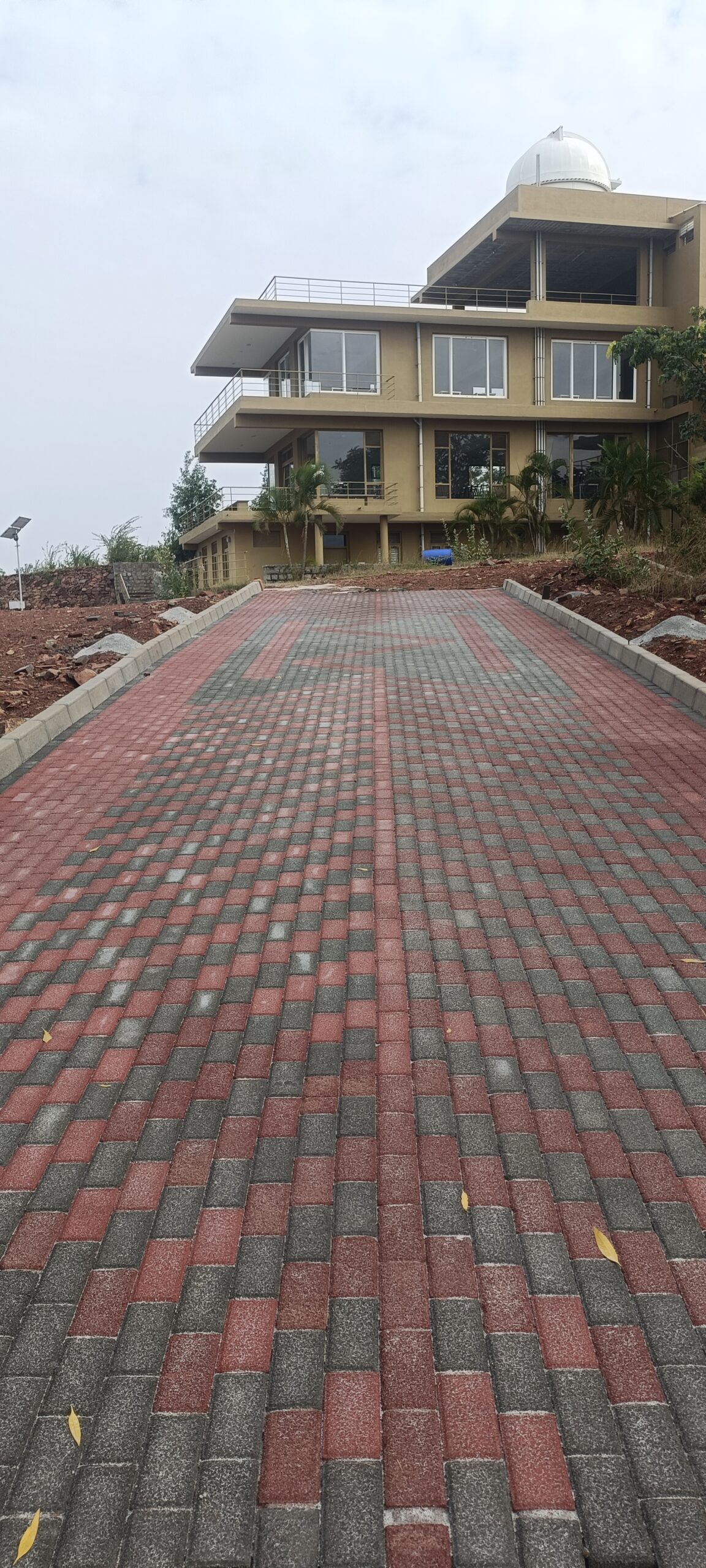
India is simultaneously pursuing rapid urbanisation and ambitious climate targets. How significant is the hidden carbon and water footprint of current construction practices, and where do you see the biggest opportunities for reduction?
The hidden environmental footprint of construction is enormous and often underestimated.Cement production alone accounts for nearly 8% of global carbon emissions. Beyond carbon, conventional construction consumes massive quantities of freshwater, natural aggregates, sand, and energy. Much of this impact remains invisible because it is embedded within the materials that go into buildings, roads, and infrastructure assets.As India continues to urbanise, the challenge is not whether we build infrastructure. The challenge is how we build it.The biggest opportunity lies in rethinking the materials that form the foundation of our infrastructure ecosystem. Replacing high-carbon materials with advanced low-carbon alternatives can create a transformational impact. Similarly, integrating industrial by-products into construction can convert waste streams into valuable resources while reducing pressure on natural materials.Another major opportunity is moving from conventional site-based construction to manufacturing-led infrastructure systems. Factory-controlled production improves efficiency, reduces wastage, optimises material usage, and significantly lowers resource consumption.At Eco Path, we have demonstrated carbon reductions exceeding 80% across multiple applications while delivering performance that meets or exceeds conventional systems. This clearly indicates that sustainability does not require compromise. In fact, many of the technologies that reduce environmental impact are also the technologies that improve infrastructure performance.The future of construction will belong to solutions that simultaneously improve durability, efficiency, and sustainability.
Your Eco-Concrete relies on industrial by-products and proprietary binder technologies. How scalable is this model across different regions of India, given variations in material availability, quality, and regulatory standards?
Scalability has been one of the core principles behind our technology development.India generates significant quantities of industrial by-products such as slag, fly ash, and other mineral residues. While material availability and characteristics vary across regions, the overall resource base is more than sufficient to support large-scale deployment of alternative binder technologies.The key lies in adaptability. We do not depend on a single material source or a fixed formulation. Our approach is based on performance engineering, allowing us to optimise mix designs using locally available materials while consistently meeting technical requirements.This flexibility is critical because India is not a single market. Different regions have different industrial ecosystems, different material streams, and different construction challenges. Technologies that can adapt to regional realities are the ones that will scale successfully.From a regulatory perspective, adoption will continue to increase as more successful projects are executed and documented. The industry is becoming increasingly open to innovation because sustainability goals, resource constraints, and infrastructure demand are converging at the same time.We firmly believe that alternative binder technologies will become a dominant part of India’s future construction ecosystem because they offer something that is rarely achieved simultaneously: superior engineering performance and dramatically lower environmental impact.
Looking ahead, do you believe the future of infrastructure lies in manufacturing-led, precast construction systems, and how could this reshape project timelines, costs, sustainability outcomes, and workforce requirements?
Absolutely.The future of infrastructure will increasingly resemble the evolution of modern manufacturing industries. Just as automotive production transformed through standardisation, quality control, and factory-based manufacturing, construction is now moving in the same direction.Manufacturing-led and precast construction systems bring predictability to an industry that has traditionally been dependent on site conditions, labour availability, and weather-related uncertainties. By shifting a significant portion of production into controlled factory environments, we can achieve higher quality consistency, faster execution, and improved resource efficiency.The impact on project timelines can be substantial. Activities that traditionally happen sequentially can occur simultaneously, significantly reducing overall project durations. Quality control also becomes more reliable because manufacturing conditions are easier to standardise than field conditions.From a sustainability standpoint, factory-controlled production enables better material optimisation, reduced waste generation, lower water consumption, and seamless integration of advanced low-carbon materials such as cement-free concrete systems.The workforce will also evolve. While manual labour will continue to play an important role, the industry will increasingly require skilled technicians, manufacturing specialists, quality engineers, automation operators, and technology-enabled execution teams.At Eco Path, we believe the future of infrastructure lies at the intersection of material science, manufacturing, and sustainability. The roads, buildings, pavements, and public infrastructure of tomorrow will not simply be constructed differently. They will be engineered, manufactured, and delivered through smarter systems that provide better performance, lower environmental impact, and greater long-term value.That transition has already begun. The question is no longer whether it will happen. The question is how quickly the industry chooses to embrace it.