



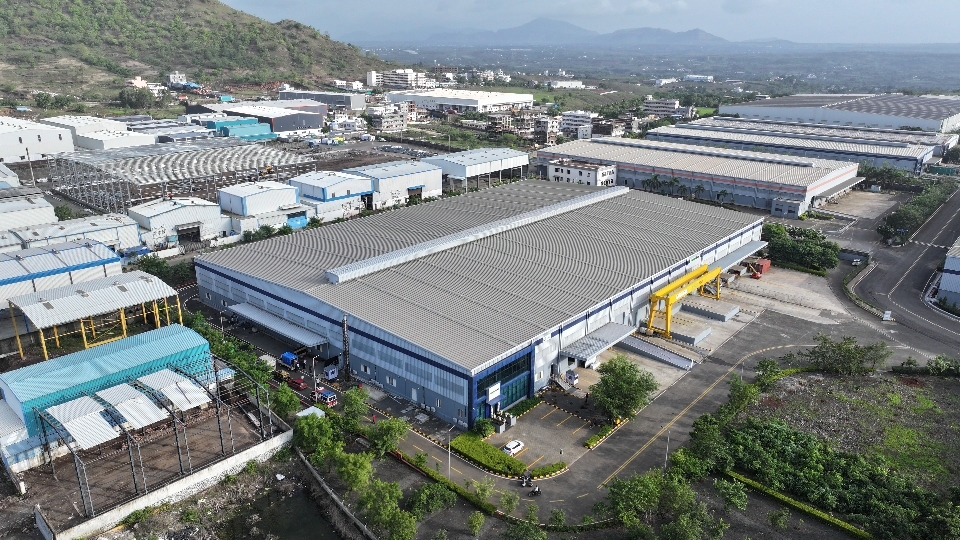
AmpereHour Energy has strengthened India’s clean energy manufacturing ecosystem with the inauguration of its new Battery Energy Storage System (BESS) Manufacturing and Integration Facility in Chakan, Pune. The new facility marks a significant investment in advanced manufacturing infrastructure as the company scales domestic production of energy storage systems.
The manufacturing unit will integrate Make in India cabinet and containerised Battery DC-AC Blocks for utility-scale and commercial and industrial (C&I) applications. With a planned annual production capacity of 5 GWh, the facility is expected to support the growing demand for battery energy storage solutions driven by renewable energy expansion and grid modernisation.
The plant combines automated manufacturing with digital quality management through AH-Suite, AmpereHour’s proprietary factory testing platform, enabling end-to-end traceability, system validation and quality assurance before deployment. The company has also integrated its ELINA Energy Management System (EMS) into the manufacturing process to enhance the performance, safety and lifecycle management of energy storage assets.
The investment represents AmpereHour’s transition from a BESS system integrator to a full-fledged manufacturing platform, strengthening indigenous capabilities in advanced energy storage technologies. The company said the facility has been developed based on operational learnings from previous energy storage deployments, with a focus on engineering reliability, safety and digital validation.
Commenting on the inauguration, Rahul Shelke, Co-founder and Managing Director, AmpereHour Energy, said the facility reflects the company’s commitment to building India’s energy storage manufacturing ecosystem through technology-led innovation and locally integrated solutions.
Ayush Misra, Co-founder and CEO, added that the company’s manufacturing approach incorporates field experience into factory processes, enabling intelligent and digitally validated systems to be delivered for utility and industrial applications.
The new facility is expected to support India’s broader objectives of strengthening domestic manufacturing under the Make in India initiative while reducing reliance on imported energy storage systems. As demand for battery energy storage grows alongside renewable power capacity, investments in local manufacturing infrastructure are expected to play a critical role in developing a resilient and self-reliant clean energy supply chain.