


Mumbai’s commercial real estate market is entering a new growth phase, with office space demand projected to expand at a CAGR of 12–15% between 2027 and 2030, according to the India Mid-Year Market Outlook FY2027 by CII and CBRE.
The projected growth comes against average annual office leasing of around 11.8 million sq ft between 2022 and 2026. Business expansion, improved connectivity across the Mumbai Metropolitan Region (MMR) and the emergence of decentralised growth corridors are expected to drive demand through 2030.
Mumbai accounted for nearly 16% of India’s total office inventory as of H1 2026, while its overall office stock is projected to increase 1.3 times by 2030. BFSI, technology companies and flexible workspace operators are expected to remain key demand drivers.
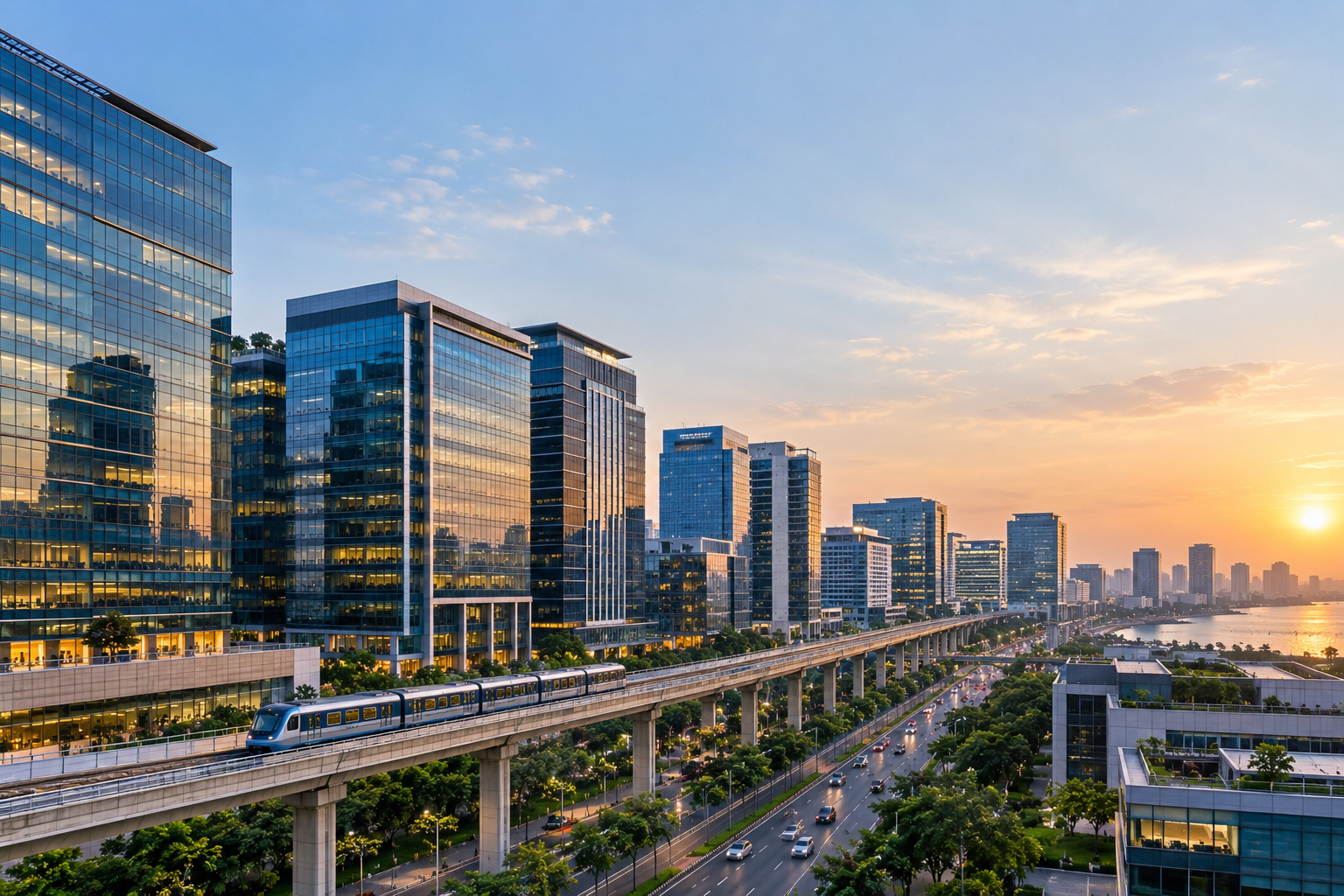
The expansion of metro networks, road infrastructure and airport connectivity is also reshaping the geography of commercial development, with demand increasingly extending beyond Mumbai’s traditional business districts into connected suburban markets.
Shilpin Tater, Managing Director, Superb Realty, said the Eastern Suburbs, including Chembur, Ghatkopar and Vikhroli, are emerging as commercial destinations as businesses place greater emphasis on workplace infrastructure and occupant well-being.
“Modern businesses are no longer just looking for prime locations; they are prioritizing occupant well-being. Modern office infrastructure is increasingly incorporating advanced indoor Air Quality (AQI) control systems, wellness features, energy-efficient designs, and sustainable architecture,” he said.
According to Tater, improved connectivity along the Eastern corridor is supporting demand for office spaces that combine accessibility with technology-enabled amenities and health-focused workplace design.
Deepak Nair, Head – Marketing, JP Infra Mumbai Pvt Ltd, said improved transit connectivity is also opening up opportunities in peripheral markets such as Mira Road and the extended Western Suburbs.
“Businesses and occupiers are actively seeking modern commercial infrastructure that combines affordability, seamless connectivity, and world-class amenities,” he said, adding that technology integration, collaborative spaces and lifestyle-oriented amenities are supporting the development of suburban business hubs.
Shraddha Kedia-Agarwal, Director, Transcon Developers, said established Western Suburban locations such as Santacruz and Khar continue to see demand for premium redevelopment and boutique commercial projects.
“Prime Western Suburbs such as Santacruz and Khar are witnessing strong, sustained demand driven by premium redevelopment projects and boutique commercial developments,” she said.
The growth outlook extends beyond office real estate. Retail is projected to record a 14–17% CAGR through 2030, the fastest among the major segments, supported by experiential retail, rising consumer spending and mixed-use developments around transit infrastructure.
Residential real estate is expected to grow at 6–8% annually through 2030, driven by infrastructure-led corridors and redevelopment and slum rehabilitation projects.
Mumbai’s industrial and logistics demand is projected to grow at 5–8% CAGR. Meanwhile, the city’s data centre capacity is expected to increase 2.1 times by 2030, potentially accounting for nearly 68% of India’s total capacity.
The outlook points to a more distributed real estate geography for Mumbai, with infrastructure investment supporting the emergence of multiple connected commercial and mixed-use corridors across the MMR alongside established business districts.