



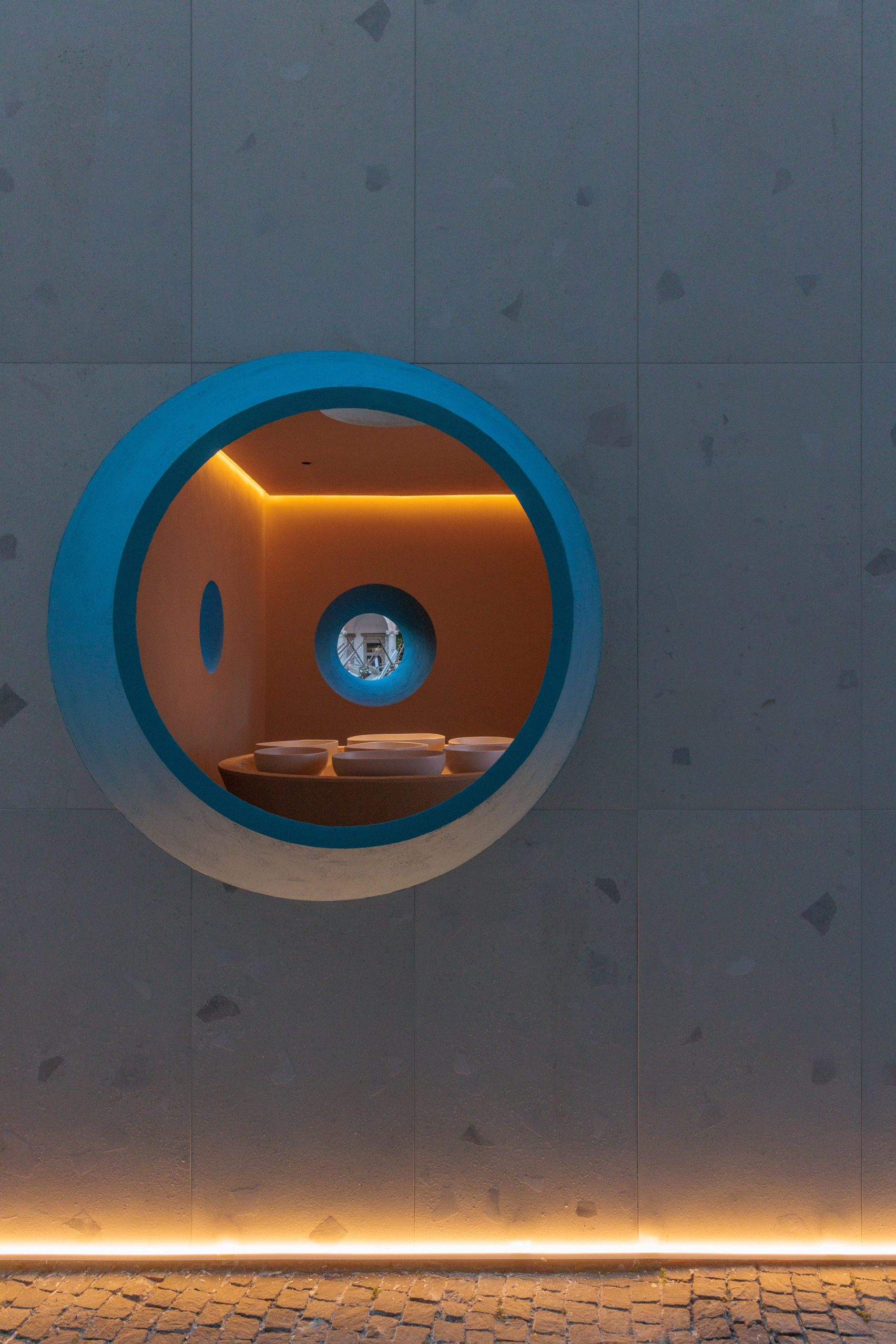
Milan Design Week 2026 saw architecture studio Snøhetta create a tile-clad structure punctuated with voids to highlight recycled washbasins and tile products by Turkish brand VitrA. The installation formed part of a wider multi-venue exhibition and event at Milan’s FuoriSalone organised by Interni magazine, named Interni Materiae. Materiae was both the name and theme of this year’s iteration, borrowing the Latin term meaning material, matter or substance. For designers tracking exhibition design and material innovation, the project positions ceramics as both medium and message within the circular economy.
Snøhetta took the qualities of water, light, scent and sound, manifesting this year’s brief into a tangible space. The resulting structure aimed to demonstrate VitrA’s brand values while seamlessly displaying a curated selection of items from its catalogue. “Ceramic is a beginning,” said VitrA. “Clay shaped by heat becomes durable, hygienic and water-resistant, the elemental foundation of our sanitaryware and tiles.” The space’s exterior was clad with VitrA’s 100 per cent recycled tiles, punctuated by a wedge of negative space in one corner, lined with orange tiles. Circular voids encircled by blue edges punctuated the walls, and a large oculus in the ceiling illuminated the interior with natural sunlight. The geometric language reinforces key ideas in sustainable architecture where material provenance and experiential quality converge.
Water, Reflection, and Material Rebirth. Immediately below the oculus was a shallow pool, on top of which a series of VitrA’s recycled ceramic washbasins were displayed. “The pool’s reflective surface amplifies the ceramic forms around it, inviting visitors to reconsider their material qualities and to sense the depth of VitrA’s technological and aesthetic innovation,” said the brand. “The space embodies VitrA’s spirit of innovation and experimentation, reflecting the advances that allow ceramic to be recycled within the production process,” the brand continued. “It traces a quiet arc from earth to rebirth.” The installation used sensory design strategies to communicate technical content, linking the meditative atmosphere to the company’s commitment to responsible production, careful employment of natural resources and dedication to circular design.
In addition to the meditative atmosphere of Snøhetta’s design, the space also aimed to reinforce VitrA’s commitment to responsible production, careful employment of natural resources and dedication to circular design. This was put front and centre through the choice of products selected for integration into the exhibition – its existing recycled washbasins on the inside and its new line of recycled tiles on the outside. “Through this interplay of elements, the installation reveals material not as a fixed substance, but as a living process – shaped, transformed, and continually reimagined,” said VitrA. “In our contribution to Materiae, material stewardship becomes a source of creativity rather than constraint, opening new pathways for innovation.” The narrative aligns with broader industry shifts toward circular design in construction and closed-loop manufacturing for building products. Para 5: Snøhetta’s spatial strategy used subtraction as a design tool. The circular voids and corner wedge create framed views that choreograph movement and focus attention on the basins while allowing daylight and air to animate the interior. The blue-rimmed apertures reference water and sky, while the orange-lined negative space introduces warmth and contrast against the predominantly white and blue palette. The oculus and shallow pool establish a vertical axis of light and reflection, turning the installation into a calibrated instrument for perceiving ceramic surfaces under changing conditions. This approach to temporary architecture demonstrates how pavilions can function as material laboratories and brand manifestos simultaneously. VitrA’s use of 100 per cent recycled tiles on the facade tests visual and performance expectations for post-consumer content in high-visibility applications.
Interni Materiae at FuoriSalone has become a critical platform for brands to articulate research and development through spatial storytelling. By commissioning Snøhetta, VitrA signals that its investment in recycling technology extends to design culture and public discourse. The installation’s emphasis on water as both theme and medium connects directly to sanitaryware’s primary function while elevating the discussion to elemental and poetic registers. For architects specifying ceramic tiles and bathroom fittings, the project offers a precedent for integrating Environmental Product Declarations and recycled content into aesthetic decisions without compromising design intent. The collaboration also underscores the role of Norwegian studio Snøhetta in translating corporate sustainability goals into experiential form, following its transdisciplinary work across landscape, interiors, and product. To find out more about VitrA, visit the brand’s website. This article was written by Dezeen for VitrA as part of a partnership.

