


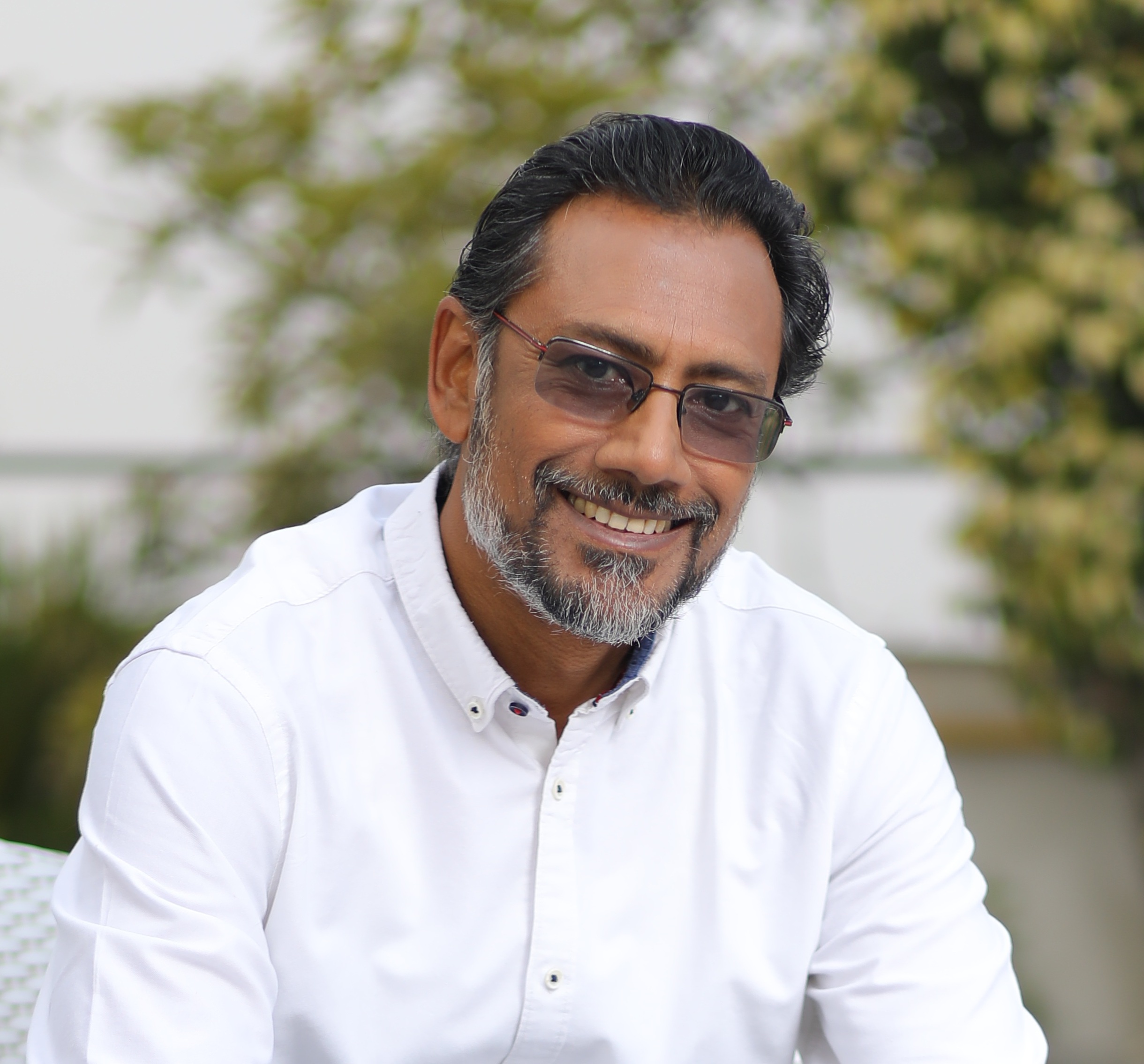
Nilanjan Bhowal’s essence of craft is elegantly simple yet profound: architecture is “nothing but placing a simple habitat in nature, which is totally in harmony with nature.” This philosophy has been the bedrock of a three-decade-long career, shaping a portfolio of work that champions sustainability, contextual design, and a deep, humanistic connection to the built environment. Beginning his practice in 1995 after post-graduate specialisations in energy-efficient architecture and human settlements in Europe, Nilanjan Bhowal, Principal Architect, Design Consortium set a clear direction. “I decided that the direction of my work would be in the sustainable domain,” he recounted. This was long before “sustainability” and “green buildings” became industry buzzwords. His early work was defined by principles of energy efficiency, minimal resource use, and a focus on local materials and context.
An early project, a resort in Jim Corbett, exemplified his ethos. Faced with limited client resources, the team made a radical decision. “We decided to make the resort with whatever materials came from the site. So, we did not get a single building material from outside the site. It was made with only mud, thatch, bamboo, stone,” Bhowal explained. This commitment to green principles led to pioneering achievements as the industry evolved. Design Consortium was behind Green One, “India’s first 5-star rated green home certified by TERI” in 2012, and The Nest in Gurgaon, North India’s first platinum-rated green home.
Organitechture: The Fusion of Nature and Technology
To describe his unique approach, which marries organic, nature-inspired forms with contemporary relevance, Bhowal coined the term ‘Organitechture’. The name itself signifies its dual focus. “It was an architecture that was inspired by nature, the forces of nature, as well as technology,” he noted. “I felt it is very important for architecture to be technologically relevant… The tech in organitechture is written with T-E-C-H.” The term has since gained traction, even becoming the subject of student dissertations.
A Philosophy of Personal Connection
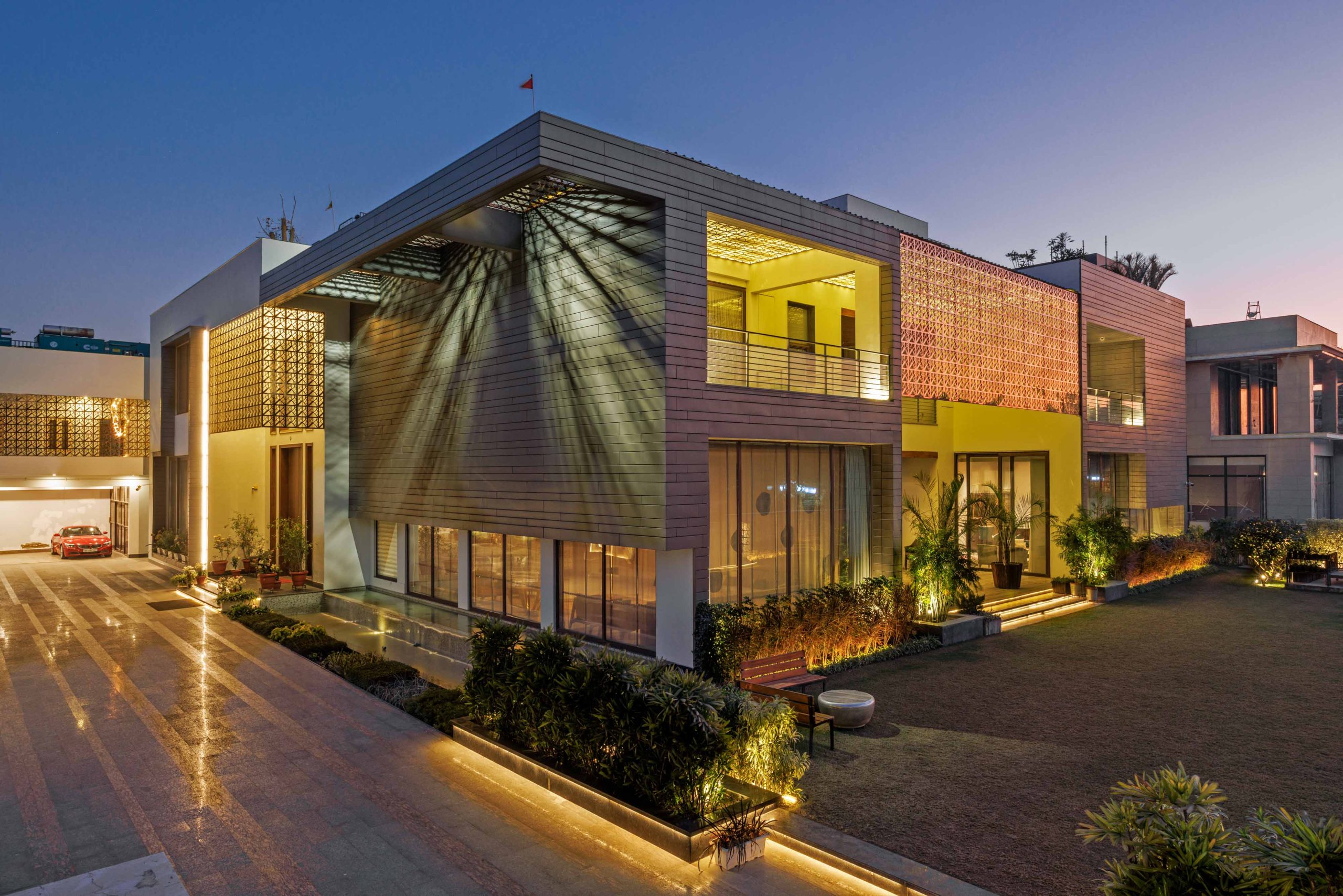
Bhowal’s design process is deeply influenced by his mentors, including Professor Suryakanth Patel and Professor B. V. Doshi, who instilled in him a dedicated and honest approach. This has led him to focus on projects with a clear and personal connection to the end-user, deliberately moving away from large, impersonal developments. “I cannot build for projects where I don’t know who the client is, like anonymous kind of architecture, or malls or factories where I don’t know who the end user is,” he stated. “I want to design for the person who will occupy and use the spaces that we design.” This focus has naturally led the firm to specialise in gated communities, residences, and boutique resorts, where attention to detail and customisation are paramount. Every project is exclusive and tailored, never repeated.
The Mechanics of Sustainable Design
For Design Consortium, sustainability is a comprehensive methodology that begins before a single brick is laid. The process includes evaluating the site’s environmental sensitivity, preserving the fertile topsoil, and considering its proximity to markets and workplaces. It also involves using materials like bricks and AAC blocks to minimise 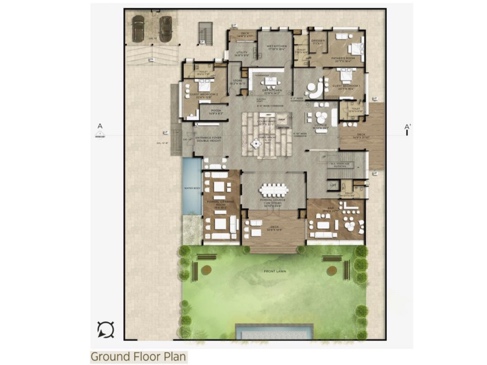 the energy consumed during construction and create an insulated building envelope, designing glazing, windows, and overhangs to maximise natural light while minimising heat gain, implementing low-flow water fixtures, 5-star rated appliances, and minimal air conditioning, integrating systems for recycling greywater from kitchens and washrooms, along with managing organic and solid waste, utilising motion-sensor and photo-sensor lighting to reduce energy consumption in lobbies, parking areas, and exteriors, and incorporating roof insulation, solar geysers, and grid-interactive solar panels, which can supply up to 50% of a home’s energy needs. Bhowal emphasised that while there is an initial investment, the returns are significant. “Whatever additional expense that one year does for making a fully green building, it pays back within a period of maybe 5 years, 4 years. And after that, it can run free of cost.”
Bridging Heritage and Modernity
Bhowal sees architectural conservation as an inherently sustainable practice. By restoring heritage buildings like the National Library in Kolkata or the Govindji Temple in Manipur’s Kangla Fort, the firm preserves the vast embodied energy of the original structures. The work often involves adaptive reuse, giving forgotten buildings a new, contemporary purpose. He credits the availability of traditional artisans in India for making authentic restoration possible. Bhowal believes in keeping vernacular building traditions alive but reinterpreting them for modern life. “You can make a house look modern and contemporary in spite of using old materials. It’s how you detail that material… That is my language in architecture.”
Architecture for All Five Senses
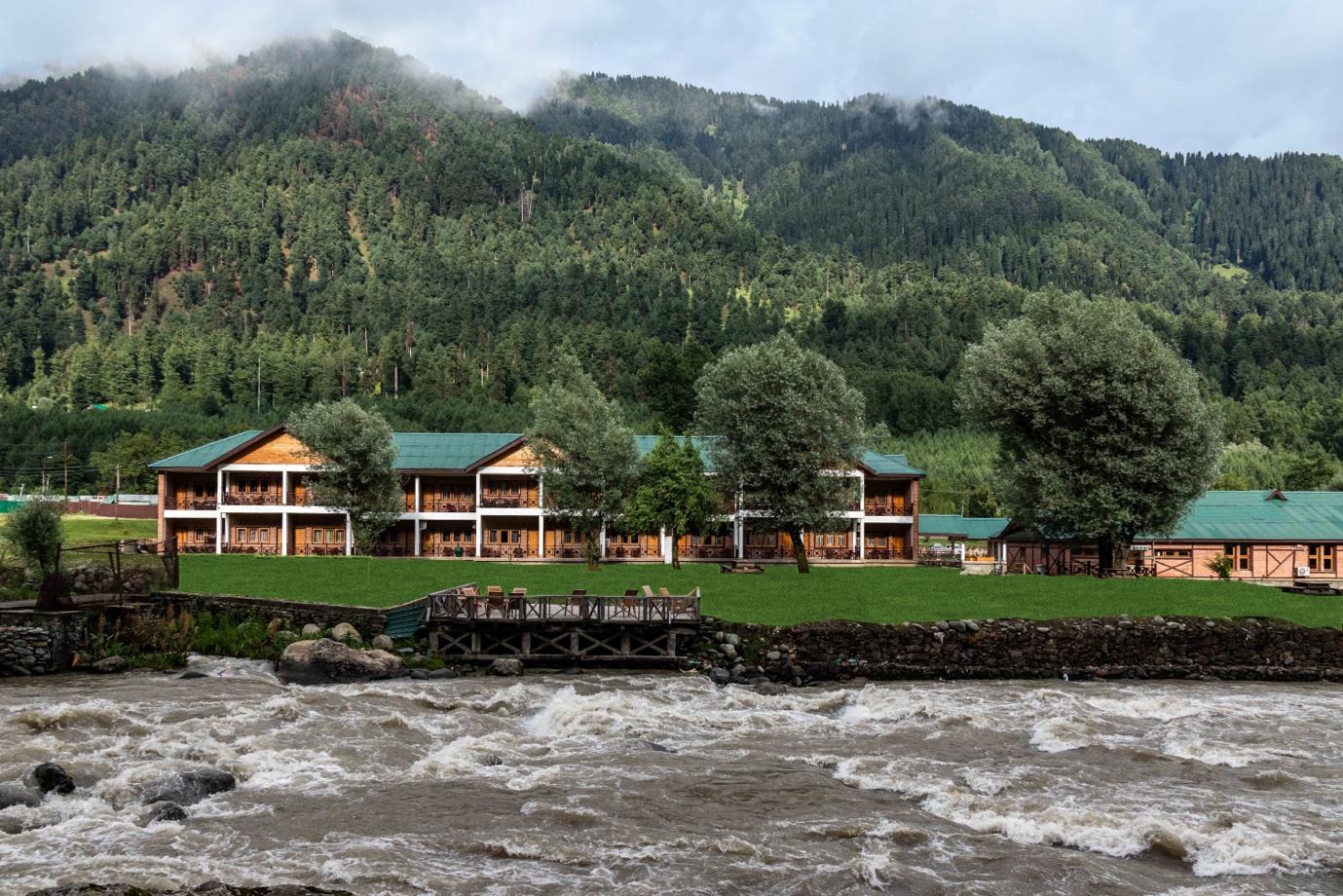
A turning point in Bhowal’s career was the Pahalgam Club in Kashmir, a project that fully realised his philosophy of multisensorial design. The team ingeniously diverted the adjacent Lidar River to meander through the resort, creating an immersive experience. “From every part of the resort, you cannot just see the river, but you can hear it, you can feel it, you can smell it, you can almost taste it, you can touch it,” he said. This project stands in contrast to an architectural trend he feels is overly focused on the visual. “For me, it is not really the visual which is important. A human being has five senses… It should arouse all the five senses. I think that makes a person much more happier.”
A Vision for the Future
After three decades, Bhowal’s work has been recognised with some of the industry’s most coveted honours, including the JK Cement Architect of the Year Award and four awards for excellence from the Indian Institute of Architects (IIA). Looking forward, his advice to the next generation is clear. “I feel architects have a huge social responsibility. And that is often forgotten,” he advised. “When someone uses that space and he feels comfortable in it and he wants to come back to it, I think that is what architecture is about. It should create that sense of belonging.” His final, and perhaps most important, piece of advice is simple: “Travel a lot, see everything, imbibe from different [cultures].”