



In the Dutch city of Beverwijk, an ordinary piece of electrical infrastructure has been transformed into an architectural artwork. Designed by Rotterdam-based Studio RAP, Powerwall introduces a large-scale 3D-printed ceramic installation to the facade of the Switchstation Beverwijk transformer station, demonstrating how design can reshape the public perception of utility buildings. The project translates the energy moving through it into a visible and tactile expression. Spanning approximately eight meters in height and five meters in width, the installation occupies a prominent position on the building’s brick facade. The transformer station itself was designed by Powerhouse Company for Dutch grid operator TenneT, while Studio RAP was commissioned to create an artwork that could establish a stronger relationship between the infrastructure and its surrounding neighborhood.
Translating Electricity into Form
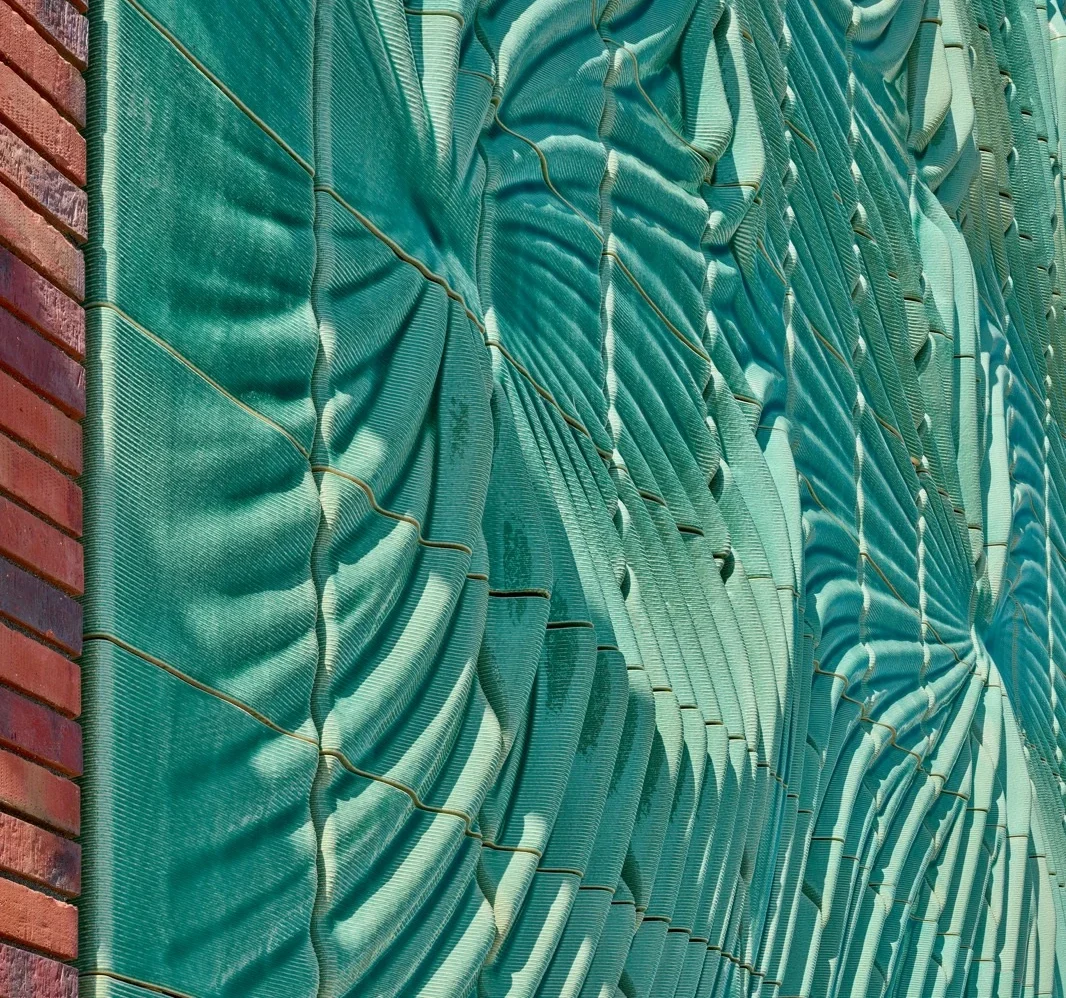
The design draws inspiration directly from the electromagnetic fields generated inside the transformer station. Studio RAP studied the flow patterns of these invisible forces and transformed them into sweeping curves, spirals, and relief-like textures across the ceramic surface. The result is a composition that appears to be in motion, even though it is fixed to the building. The artwork acts as a visual interpretation of the building’s purpose. Through its layered geometry, Powerwall offers a physical representation of the energy continuously moving through the station, creating a rare connection between infrastructure and public understanding. The project makes the technical function of the site legible to residents and passersby.
Powerwall consists of 322 individually designed ceramic tiles, each generated through computational design tools developed by Studio RAP. No two tiles are identical. Algorithms were used to convert magnetic field geometries into buildable forms, allowing the overall composition to emerge as a continuous landscape of ceramic elements. Production took place in Studio RAP’s Rotterdam workshop, where robotic clay-printing technology was employed to fabricate each component. The visible ridges left behind by the printing process were intentionally preserved, creating a textured surface that records the movement of the robotic arm. Instead of hiding the manufacturing method, the project celebrates it, allowing the fabrication process to become part of the final product.
Material, Light, and Craft
A translucent turquoise glaze unifies the installation while enhancing its sculptural depth. As daylight changes throughout the day, the glazed surface reacts differently, highlighting recesses, edges, and printed textures. The artwork therefore shifts in appearance depending on weather conditions and viewing angles, offering a dynamic experience for passersby. Studio RAP also embraces the natural unpredictability of ceramics. During firing, clay shrinks, warps, and develops subtle variations. The studio incorporates them into the final composition. The resulting surface balances digital precision with the material qualities of traditional ceramic craftsmanship, merging robotic fabrication with the inherent character of fired clay.
Powerwall reflects a broader purpose within Studio RAP’s practice, using digital fabrication to bring embellishment, texture, and narrative back into contemporary architecture. Founded by Lucas ter Hall and Wessel van Beerendonk, the Rotterdam studio has become known for its experiments with robotic manufacturing and large-scale ceramic applications, including projects such as New Delft Blue and Ceramic House. With Powerwall, the studio extends this exploration into the realm of public infrastructure. What was once a largely unnoticed transformer station now functions as both an essential utility building and a civic landmark. The project demonstrates how advanced fabrication technologies can contribute to construction efficiency and also to the cultural and visual quality of the built environment. Para6
Expanding the Role of Infrastructure
The Switchstation Beverwijk serves the Dutch grid operator TenneT and handles critical electrical distribution for the region. By adding a commissioned artwork to its facade, the project reframes infrastructure as a site for public engagement. The installation does not alter the station’s technical function but changes how the building is perceived within Beverwijk. Studio RAP’s use of 3D-Printed Ceramic Tiles allows for complex, site-specific geometry that would be difficult to achieve with conventional masonry. Each of the 322 components was digitally mapped and robotically produced, ensuring precise alignment across the eight-meter by five-meter surface. The turquoise glaze was selected to provide visual coherence and respond to natural light conditions.
Powerwall Project Details
Project: Powerwall
Location: Beverwijk
Design and Fabrication: Studio RAP
Client: TenneT
Year: 2026
Artwork Size: Approximately 8m x 5m
Material: 3D-printed ceramic with translucent turquoise glaze
Components: 322 unique ceramic tiles
Subscribe to Updates
Get the latest creative news from Architecture Update about art, design and business.
Studio RAP Installs 3D-Printed Ceramic Powerwall in Beverwijk

Previous ArticleUnilin Technologies Appoints Floris Koopmans as New President
Related Posts
Add A Comment
