


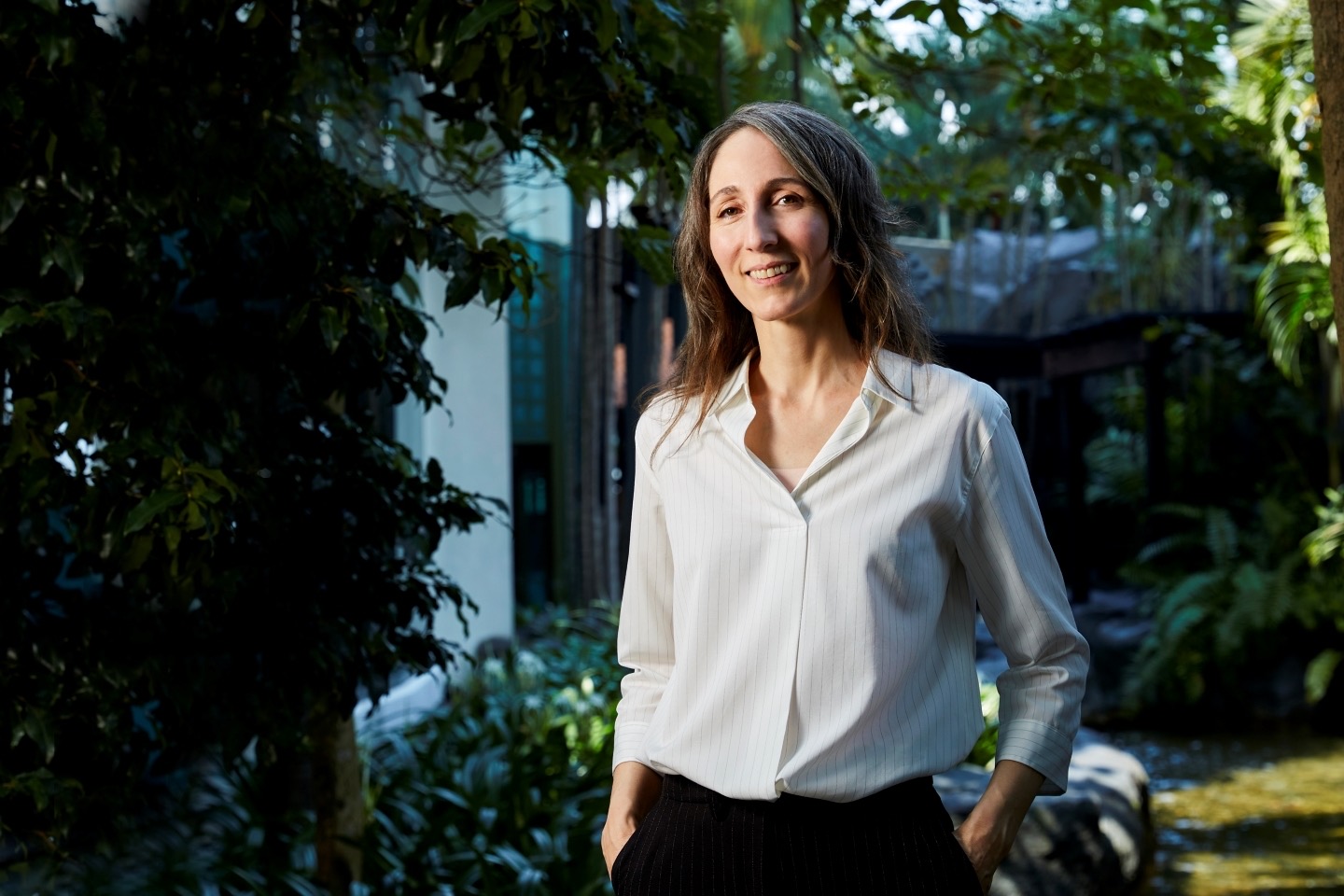
As workplaces become more flexible, sustainability in office furniture is becoming a priority, with greater focus on materials, longevity, repairability, reuse and end-of-life impact. The focus is shifting from how sustainably furniture is made to how long it can remain useful and contribute to a more circular workplace. Jane Abernethy, Chief Sustainability Officer, Humanscale, sees this shift as an opportunity to rethink how resources are used. An industrial designer by training, Abernethy moved into sustainability at Humanscale in January 2012, turning what began as an effort to help one product achieve sustainability certification into a company-wide sustainability function. In a conversation with Asmita Mukherjee at the Humanscale office in Bengaluru during her short visit to India, Abernethy discusses regenerative design and the role architects and designers can play in changing the industry.
How can flexible workplaces make design more sustainable?
Major changes create an opportunity to rethink how things are done. When people are used to working in a particular way, changing behaviour can be difficult. But when the workplace itself is changing, it becomes easier to reconsider how we use spaces and materials.
A workplace may serve one purpose today and another tomorrow. We should not have to empty an entire space and replace everything every time the way we work changes.
The smarter approach is to design spaces and products that can evolve. That keeps materials in use for longer and reduces waste, resource extraction and energy use.
Sustainability is often seen as expensive. What needs to change?
Sustainability can be expensive, but it does not have to be. There are expensive ways of doing sustainability, but I would say, do not choose those ways. One of the bigger challenges is changing the mindset around newness. We often open a new space and expect every material and product to be new. That is inherently unsustainable.
There is already an enormous amount of material in the world. We need to become more comfortable with using materials that have been used before and finding ways to celebrate them. That can also be less expensive than extracting new resources. It requires creativity and innovation, but it is a much better way of thinking about what we consider valuable. I would like to see people buy fewer things, but better things.
What does Humanscale’s sustainability approach cover?
We look at six areas: circularity, climate and energy, healthy materials, wildlife, social responsibility and water. Circularity is about keeping materials in use. Climate and energy covers our factories, manufacturing partners and supply chain. Healthy materials is about understanding what is actually inside the products surrounding us.
We also look at wildlife, social responsibility and water because sustainability cannot be addressed through one lens.
We are a for profit company, but our ambition is to leave the world better because we are here. We are not only trying to reduce the harm we create. We want to move towards a positive impact. We are not there in every category yet, but that is our vision.
How does that approach translate into India?
Sustainability has to respond to local conditions. Water is a good example.
A few years ago, we studied water use across our factories and supply chain. We went beyond our direct suppliers and looked at tier- II and tier – III suppliers to understand which processes were using significant amounts of water and where those processes were taking place.
We identified parts of our supply chain in India where significant water use overlapped with water stressed regions. We then worked with local communities to create positive water handprints, including digging wells.
We also worked with scientists to understand the watersheds and make sure the wells would not negatively affect the local ecosystem.
That is what a holistic approach to sustainability looks like. It is not simply about reducing your own footprint. It is about understanding the wider system and trying to leave it better.
Where do AI and technology fit into sustainable design?
Sustainability involves a huge amount of technical information. If a designer is choosing between three products, understanding the climate impact, ingredients and other sustainability information can become three separate research projects.
AI could make that information much more accessible and make sustainable decision making easier at the point when a product or material is being specified.
Of course, it has to be done properly. You cannot ask a generic AI system a sustainability question and assume the answer is accurate. However, there is a real opportunity to develop tools that can guide better decisions.
At Humanscale, we have started using AI in our life cycle assessment work. There is a lot of repetitive analysis involved, and AI can handle a significant part of that work. Though people still validate and audit the results, but the process has become much faster.
I also see opportunities beyond our industry. AI can analyse satellite imagery and identify changes in landscapes that people could never monitor manually.
What is the biggest shift you would like to see in the way India approaches sustainable design?
My impression, having been here for a relatively short time, is that there is still a strong association between newness and value.
I would like to see that change. In some markets, something that has been used before can become a badge of honour because it has a story and character. The conversation should move from whether something is new to whether it is durable, high quality and made from healthy materials. Reuse should be seen as a positive design decision, not as a compromise.
How is Humanscale applying circularity to its own products?
We have taken chairs back, refurbished them and redeployed them into the market.
It is more relationship based and case by case rather than a formal buyback programme, but we have done it many times. Our principle is pretty simple, if a product still has value, we should find a way to keep it in use rather than automatically treating it as waste.
What does regenerative design mean to you, and what role can architects and designers play?
At its simplest, regenerative design means creating something that leaves the world better. It could be a product, a space or an organisation. The question is whether people, ecosystems and communities are better because of what we have created.
I have been part of a group of around 50 not for profits, architects, designers and sustainability professionals that has been meeting to explore what the word regenerative actually means. The discussion is about supporting people and ecosystems while also recognising the financial and social systems around them. I do not think designers and specifiers always realise how much influence they have.
When an architect specifies a material, manufacturers pay attention. That decision can influence what gets produced at scale. It is a very powerful leverage point.
If I had to make one broad recommendation for India, it would be to consider reuse. There is already an enormous amount of material available, much of it mismanaged. Reusing what already exists is a significant opportunity to make design more sustainable without necessarily making it more expensive.
I would encourage architects and designers to think about reuse, durability, material health and quality, and to challenge the idea that something has to be new to be valuable. Ultimately, the future is about buying fewer things, but better things, and designing spaces where those things can remain useful for much longer.