



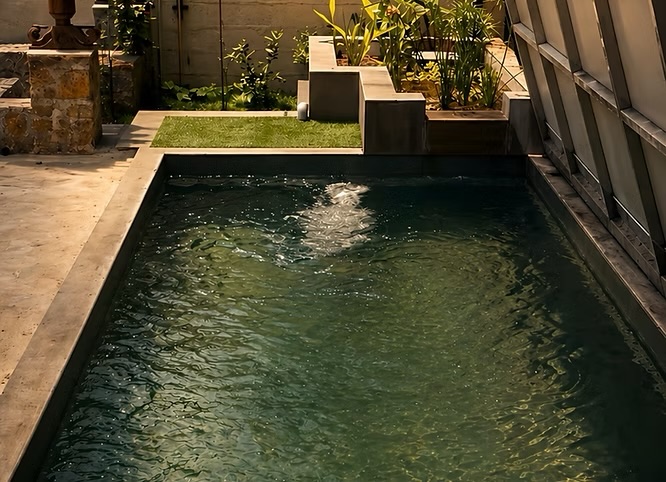
A growing number of Indian ventures are drawing on traditional water management and land-use practices as homeowners increasingly seek alternatives to resource-intensive urban living. Three South India-based enterprises — Biosphere Nature Pools, Swasya Living and Biome Environmental Solutions — are adapting older ecological systems for contemporary residential developments, reflecting a broader shift towards nature-based solutions in housing and community design.
Coimbatore-based Biosphere Nature Pools has built its business around chemical-free swimming pools that use aquatic plants and biological filtration systems instead of chlorine-based treatment. Founded by Vikash Kumar after developing a natural swimming pond at his farmhouse in Pollachi, the company designs and constructs bio-pools for homes, farmhouses and hospitality projects. The model relies on planted regeneration zones and natural filtration processes to maintain water quality while reducing chemical usage and energy consumption.
In Karnataka, Swasya Living is developing farmland-based residential communities that integrate agriculture with second-home ownership. Founded by former startup executives Nijish Nair and Ashrith Begur, the company’s flagship project in Sakleshpur combines residential plots with managed organic farming, allowing homeowners to participate in food production through cultivated vegetables, fruits and herbs. The model reflects growing interest in land-linked living and experiential second-home developments.
Meanwhile, Bengaluru-based Biome Environmental Solutions has focused on integrating ecological architecture, rainwater harvesting and decentralised water management into building design. Founded by architect Chitra Vishwanath and water management expert S. Vishwanath, the firm has worked across residential, institutional and commercial projects, promoting the use of locally sourced materials, earthen construction techniques and water-sensitive design practices. The organisation emerged from the merger of Vishwanath’s architectural practice and the Rainwater Club, a group focused on rainwater harvesting and sanitation.
Industry observers note that rising concerns around water security, urban sustainability and resource efficiency are driving renewed interest in traditional practices that were once common across Indian settlements. Rather than introducing entirely new technologies, these ventures are adapting established approaches such as natural water filtration, rainwater harvesting and land stewardship to meet contemporary housing requirements.
While operating in different segments, the three ventures share a common focus on reducing dependence on centralised infrastructure and reconnecting residential developments with local ecological systems. Their growth reflects a broader trend towards integrating environmental resilience and resource management into the design of homes and communities.

