



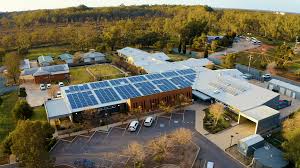
Refurbishment works have commenced on the emergency department at Balranald Multipurpose Service, published by the Far West Local Health District on 1 June 2026. The emergency department sustained severe storm damage in January this year and has been operating from a temporary location within the Multipurpose Service until repairs are completed. For healthcare architects and hospital planners, the project highlights the resilience strategies required when critical care infrastructure must continue functioning through phased repairs. The scope of work underscores the impact of extreme weather on built assets and the need for robust detailing at ceiling, wall, floor, and roof junctions in regional health facilities.
Refurbishment works will include repairing the ceilings, walls and floors as well as the roofline over the area. Addressing the roofline is critical for long-term water ingress protection, while ceiling and wall repairs will restore clinical hygiene standards and acoustic performance essential for emergency care environments. Flooring remediation in emergency departments typically involves seamless, chemical-resistant surfaces with slip ratings suitable for high-traffic, wet-process zones. The coordinated repair of these elements ensures that infection control, durability, and service continuity are reinstated to original specification levels.
Contractor Appointed With Regional Healthcare Experience. Construction company HPAC has been engaged as the building contractor to deliver the work, which is expected to be completed this year. HPAC was appointed to deliver the new 30 million dollar Wentworth Health Service Redevelopment, which opened to the community last year. The contractor’s recent experience on a major regional health project indicates familiarity with health infrastructure guidelines, staging requirements, and infection control protocols during live-site works. For public sector health infrastructure, continuity of care during construction is a key performance metric, and appointing a contractor with local delivery experience helps de-risk programme and compliance outcomes.
All health services are expected to remain operational while refurbishment works take place. Any temporary changes or access restrictions at the Multipurpose Service will be communicated to the public in a timely manner. Consumers and visitors are asked to follow all work site directions to ensure public safety is maintained. The public’s understanding and patience is appreciated during this time. From a design and facilities management perspective, maintaining operations during refurbishment requires careful phasing, negative pressure zones, hoarding with viewing panels, and clear wayfinding to separate construction access from patient flows. These measures are standard in healthcare construction to protect immunocompromised users and maintain clinical functionality.
If an illness or injury is not serious or life-threatening, people are encouraged to call Healthdirect Australia on 1800 022 222, for 24-hour telephone health advice. A nurse will answer the call, ask a series of questions about the illness or injury and connect the caller with the right care. This triage guidance supports load management at the emergency department while refurbishment is underway, reducing non-critical presentations and allowing the temporary facility to focus on urgent cases. For healthcare designers, such operational advisories are part of the broader service model that informs department sizing, waiting area capacity, and telehealth integration in regional facilities.
The Balranald Multipurpose Service refurbishment reflects a growing pattern where climate events necessitate rapid repair and upgrade of health infrastructure. The integration of roofline repairs with internal ceiling, wall, and floor works points to a holistic approach rather than cosmetic patching, which is essential for meeting contemporary health building codes and asset longevity. As regional health districts adapt to increased storm intensity, specifications for impact-resistant roofing, sealed ceiling systems, and resilient flooring will become more common in tender documents. HPAC’s engagement following the Wentworth Health Service Redevelopment demonstrates how contractors with proven health sector delivery are being retained for sequential projects, creating efficiencies in knowledge transfer and compliance. The completion target within this year sets a tight programme, typical for emergency department repairs where community access to acute care cannot be compromised. For the architecture and construction community in healthcare, the project is a case study in maintaining clinical operations during essential fabric upgrades, balancing safety, speed, and standards.

