



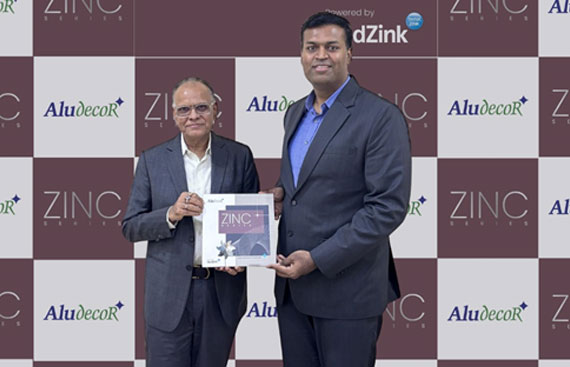
Kolkata Townhall Unveils Façade Material for Roofs and Walls
Aludecor, India’s leading and most trusted Aluminium Composite Panel brand, introduced a new range of zinc composite panels on Wednesday, 15 April 2026, marking a push to expand the use of zinc in Indian construction and address long-standing challenges in façade performance, according to correspondent Emily. The announcement was made at a company townhall in Kolkata, where senior leadership positioned the launch as part of a broader shift in how building materials are evaluated, with greater focus on durability, safety, and lifecycle cost rather than just upfront pricing. Aludecor has been working with European zinc manufacturer NedZink since 2023 to bring technical expertise from markets where zinc is more widely used and to support product development and application knowledge in India.
At the centre of the launch is a 0.3 millimetre zinc configuration within the composite panel system, which the company says sets a new benchmark in the category. The panels are designed for use across both façades and roofing applications. The panels are available in fire-retardant classifications such as A2 and B, which have become more relevant as fire safety regulations tighten in urban construction. Recent incidents have led to greater scrutiny of cladding materials, especially in high-rise buildings and public infrastructure. The company has also introduced an anti-fingerprint coating on select finishes to address handling issues during installation. The coating is designed to reduce marks during early stages and gradually fade, allowing the natural zinc surface to develop over time. In a departure from traditional zinc finishes, which are typically grey, the new range includes multiple colour options. These include white, black, brown, blue, red, green, and platinum shades, aimed at giving architects more flexibility in design.
Zinc has been used widely in Europe for roofing and façades, where it is valued for its ability to form a protective surface layer over time. This process, known as patination, helps the material resist corrosion and reduces the need for repainting or regular maintenance. In India, however, zinc has remained limited to niche applications. Higher costs, lack of familiarity, and installation challenges have slowed adoption compared to materials such as aluminium composite panels and coated steel. Aludecor’s new product attempts to bridge that gap by combining zinc with composite panel technology. Industry professionals say the composite format could improve the usability of zinc in Indian conditions. “Solid zinc is durable but can be difficult to handle at scale,” said a façade consultant based in Mumbai. “A composite approach can make it more practical for larger projects.”
“Materials today often fade, corrode, or lose their character over time,” said Ashok Kumar Bhaiya, Founder and Chairman and Managing Director, Aludecor. “We asked a simple question — can a façade material not just age, but evolve? This is our answer to that.” He added that the aim is to move beyond static finishes and introduce surfaces that change gradually while maintaining performance. “We are not just introducing zinc. We are trying to change how buildings age,” he said. The company also used the launch to underline its shift towards premium façade solutions. While aluminium composite panels continue to be a volume-driven category, zinc is being positioned as a higher-value offering. “This product will not compete on price,” Bhaiya said. “It will grow through knowledge, confidence, and conviction. It is not just a panel, but a future-ready façade solution.”
Sustainability is another factor behind the renewed interest in zinc composite panels. The material is fully recyclable and has a long service life, often spanning several decades. As developers and investors place greater emphasis on environmental performance and lifecycle cost, such attributes are becoming more important in material selection. This reflects a broader shift in architecture, where materials are chosen not only for function but also for how they appear and evolve over time. Zinc’s ability to change surface characteristics is seen by some designers as an advantage rather than a limitation. For Aludecor, the zinc composite panel range is part of a larger strategy to expand beyond its core offerings and strengthen its position in the façade segment.
Industry observers note that adoption may take time. Builders and contractors often prefer established materials unless there is a clear advantage in cost, speed, or compliance. Awareness and training across the value chain will play a key role in scaling new materials. However, early interest is expected from architects working on premium housing, commercial developments, and institutional projects. These segments are more open to experimenting with materials that offer durability and a distinct visual identity. The launch also reflects a wider trend in construction, where materials are being assessed on long-term performance rather than initial cost alone. Factors such as maintenance, safety, and environmental impact are increasingly influencing decisions. As Bhaiya summed up during the event, the company’s goal is not just to introduce a new material, but to redefine expectations. “We are not following global trends,” he said. “We are trying to set them.” Whether zinc can move beyond niche use in India will depend on how quickly the ecosystem adapts from architects and developers to fabricators and contractors. But with increasing pressure on durability, safety, and sustainability, materials that offer longer life and lower maintenance are likely to gain ground.
Image Courtesy: siliconindia