



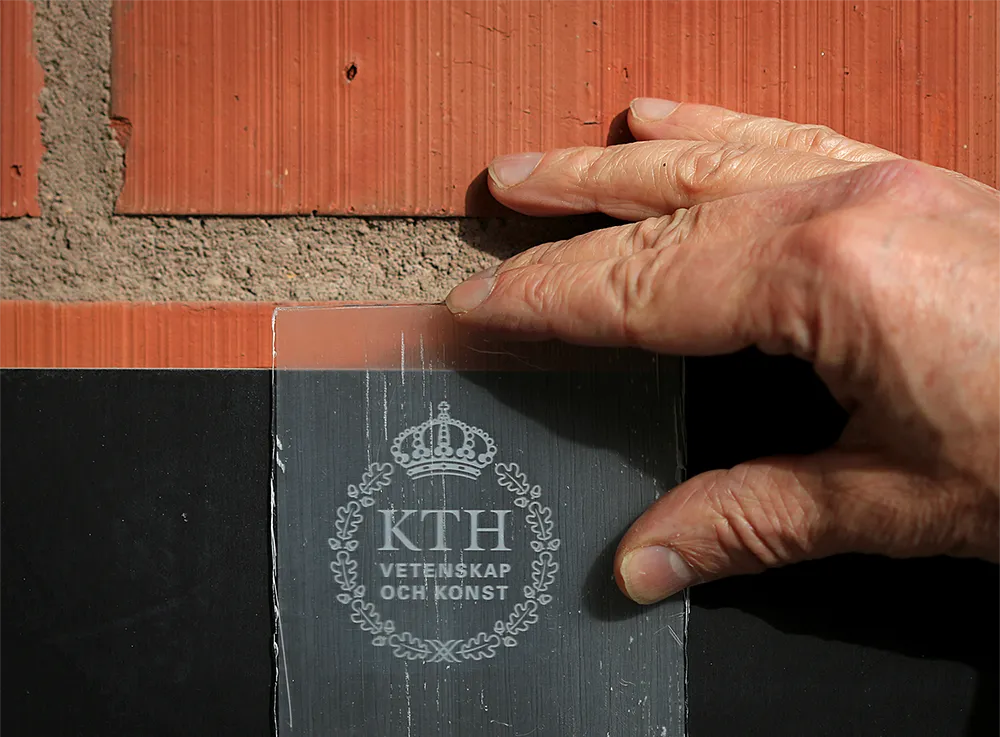
Researchers at the KTH Royal Institute of Technology have developed a wood-based material that is optically transparent while maintaining or exceeding the strength of glass, opening new possibilities for innovative design and energy-efficient architecture. This breakthrough material could transform the construction industry with its unique blend of strength, sustainability, and aesthetic appeal.
The transparent wood is created by chemically removing lignin, a natural polymer that gives wood its brown color and blocks most light, and replacing it with a transparent polymer such as acrylic or epoxy. This process results in a wood veneer that can transmit light while preserving structural integrity. Thin veneers achieved up to 85% transparency, outperforming conventional materials in fracture resistance and toughness.
Transparent wood retains light diffusely, reducing glare while providing insulation. Some variants have demonstrated thermal conductivity up to five times lower than glass. The material can be integrated with phase-change materials for temperature regulation and electrochromic polymers for smart windows.
Potential applications include:
– Energy-efficient windows and facades that light interiors while improving insulation
– Structural glazing—load-bearing panels that won’t shatter like conventional glass
– Solar panels with semi-transparent properties suitable for integration into building surfaces
– Smart wood surfaces—panels that adjust opacity, color, or temperature control through electric or thermal modulation
While transparent wood remains largely at the laboratory stage, researchers are working to improve transparency, mechanical consistency, and eco-friendly polymers. As industrial scaling progresses, transparent wood may soon move from research labs into mainstream architecture.
Image Courtesy: parametric-archtiecture.com

