



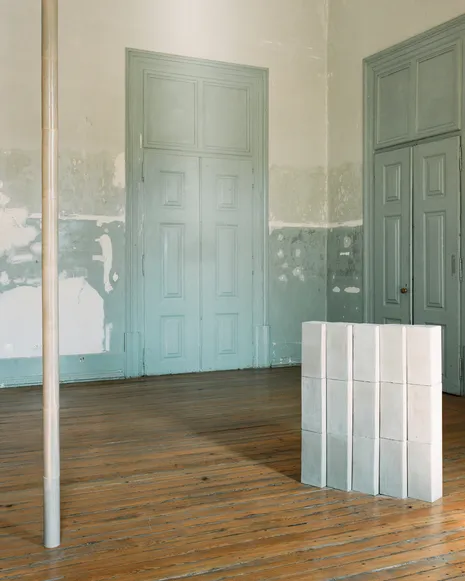
Australian architectural studio Besley and Spresser has showcased treated asbestos waste converted into carbon-negative building materials at the 2025 Lisbon Architecture Triennale. The installation, 09.ED.15 Redux, explores the environmental legacy of asbestos and its potential for transformation into safe, functional materials.
“What if one of the building industry’s most hazardous materials could become one of its most promising?” said Peter Besley, Architect, Besley and Spresser. “Asbestos embodies the contradictions of a lot of industrial material culture: convenience vs damage. By transforming it, we’re trying to contribute to the rethinking of the material culture of city-making.”
The exhibit features treated asbestos waste converted into bricks and a glazed column, showcasing the potential for renewal and repair. The process involved collaboration with material scientists Asbeter from Rotterdam and ceramicist Benedetta Pompilli in Amsterdam. Jessica Spresser, Architect, Besley and Spresser, said, “We wanted to take something historically feared and reveal its potential for renewal through innovation, research and design.” The installation makes visible the idea that repair can be both a technical and a poetic act.
This innovative solution addresses the massive problem of asbestos waste, which is typically sent to landfills, and offers a sustainable alternative for the construction industry. The project’s success could pave the way for widespread adoption of asbestos transformation technologies.
The installation is part of the Independent Projects program at the 2025 Lisbon Architecture Triennale, curated by Ann-Sofi Rönnskog and John Palmesino, founders of Territorial Agency.
Image Courtesy: Besley and Spresser

